 Advertise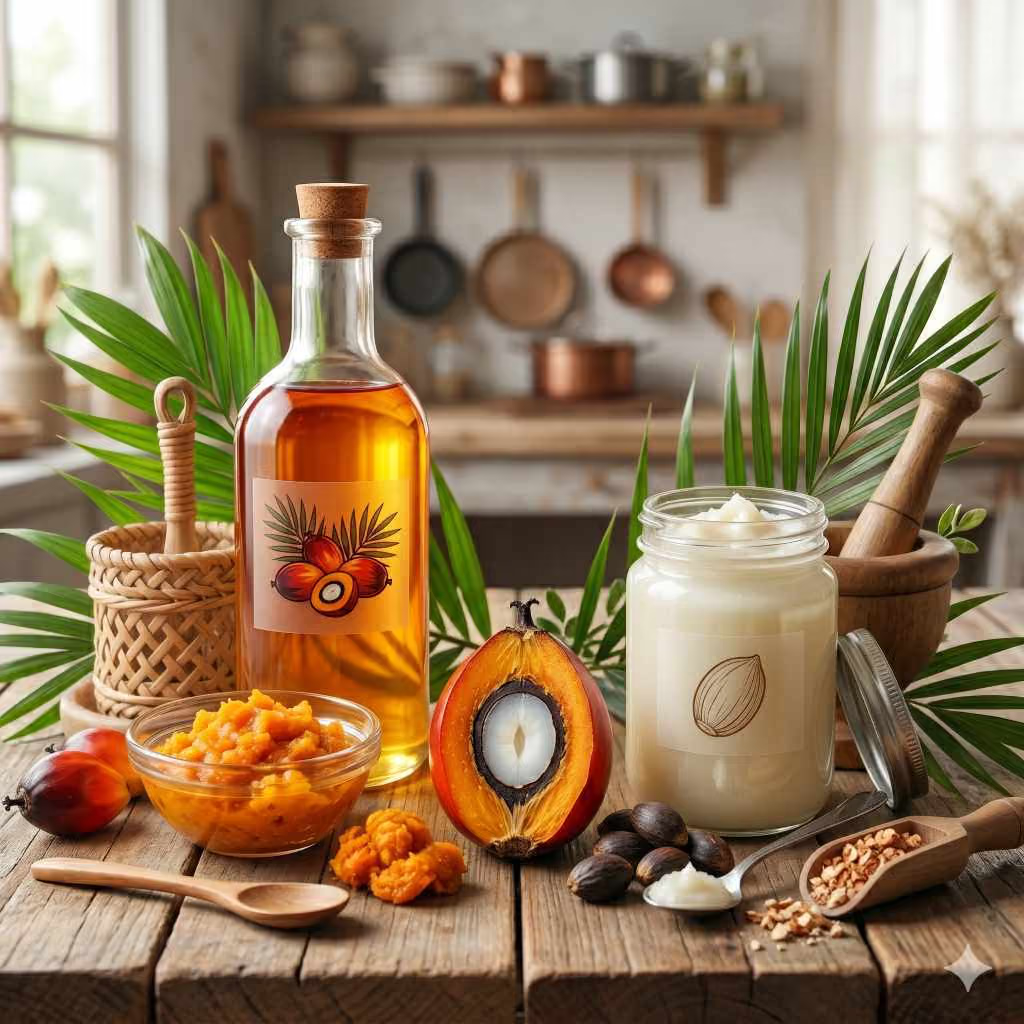
Note: This article was AI-translated from Arabic and is currently under manual review. The author is not responsible for any translation errors. Please refer to the original Arabic text for the most accurate and authoritative information.
Dates are similar to dates in our Arab countries, but they are completely different in their content. They are for juicing and not for eating. The oil palm fruit is a unique fruit. Two different oils come out of it and are used in the manufacture of much of what we eat as well as many non-food industries such as detergents, personal care products and cosmetics. Both palm oil and palm kernel oil are extracted from the oil palm tree (Elaeis guineensis), but there are significant differences between them in terms of source, fat composition, uses, production volume, extraction rate, and even prices.
The source of both palm oil and palm kernel oil

The composition of fat
The main uses
Because of the different composition of the two oils, their uses also vary greatly.
Extraction rate
Their derivatives
Both oils are similar in that they can be divided to separate their solid content from the liquid so that they can be used in many products as needed and also to make solid fats without the need for hydrogenation to result in:
Palm oil:
1. Palm olein oil (liquid derivative)
2. Palm stearin oil (solid derivative)
Palm kernel oil:
1. Palm kernel oil (liquid derivative)
2. Astearin palm kernel oil (solid derivative)
Total world production for 2023
Some may think that since the two types of oil come out of the same fruit, their productivity will be similar. However, the difference is very significant in favor of palm oil.
The difference in prices
Based on the mass production difference between palm oil and palm kernel oil, you can speculate that the price difference will favor palm oil and this is true. The difference is very significant as at the time of writing the article, the price difference between crude palm oil and crude palm kernel oil is close to 60%.
Summary
Although both palm oil and palm kernel oil are extracted from the oil palm tree, differences in the oil source within the fruit lead to significant differences in chemical composition, uses, production volume, extraction rate, and market prices.
In the food and non-food industries, each plays a unique role, with significant differences in market value and industrial applications.