 Advertise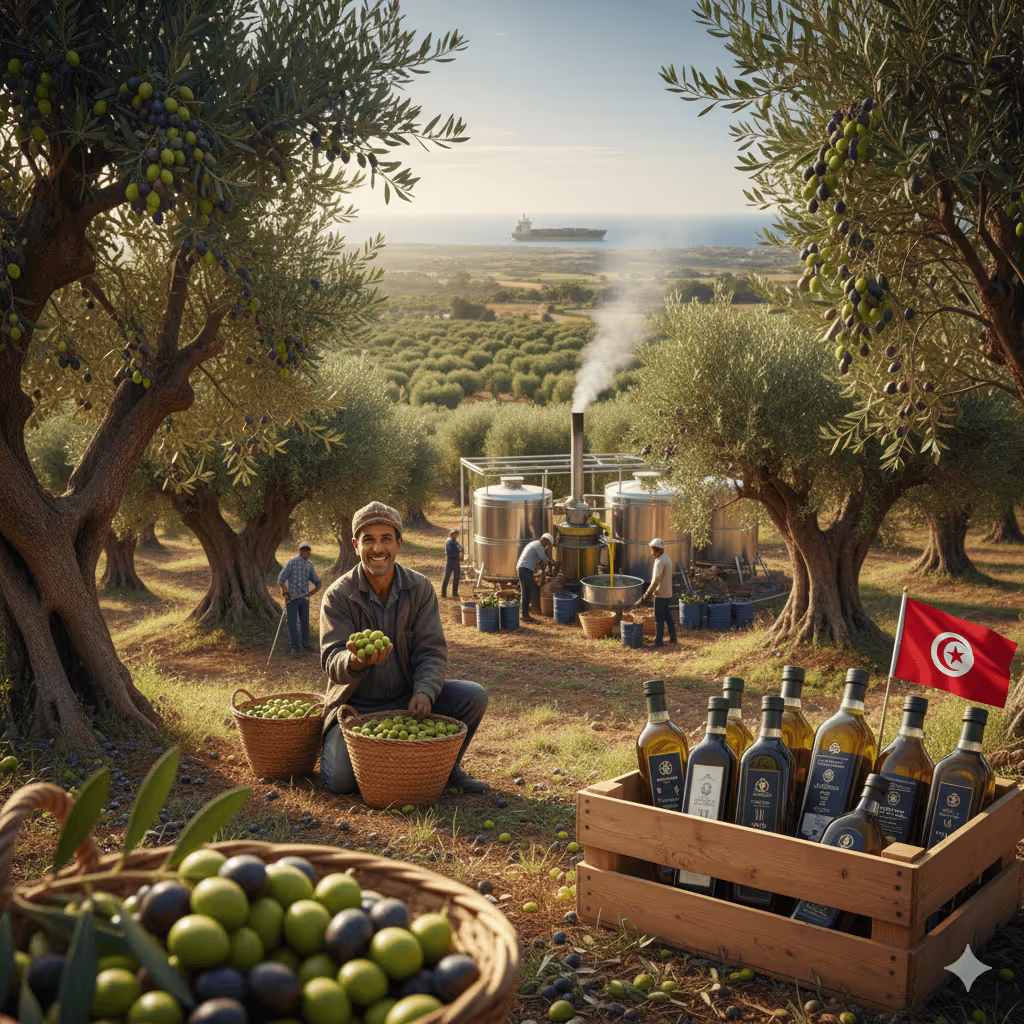
Tunisia is forecasting a record olive oil harvest of 500,000 tonnes, up 50% on last year, a boost that would strengthen its economy and cement its standing among the world's top producers.
Najah Saidi Hamed, head of the country's olive producers' chamber, said the harvest outlook reflects favourable rainfall patterns and fruit set across all major growing regions. A final tally approaching 500,000 tonnes would mark a new record for Tunisia, surpassing the country's previous best campaigns.
Olive oil is Tunisia's leading agricultural export and a crucial source of foreign currency. In recent years the sector has posted record export revenues, even though most shipments leave the country in bulk rather than as branded bottles – an issue policymakers and producers continue to address, according to Reuters.
Independent industry analyses also point to a record 2025/2026 crop, with estimates ranging from 400,000 to 500,000 tonnes as orchards recover from previous drought pressures. Historically, Tunisia's largest modern harvest came in the 2019/2020 campaign, widely cited by the International Olive Council at around 440,000 tonnes. That benchmark underscores just how exceptional a 500,000-tonne result would be.
Tunisia regularly ranks among the world's largest olive oil exporters. Even amid recent price volatility, export values have remained substantial, underlining the sector's importance to the trade balance. A larger crop typically supports higher export volumes, although global prices will determine total revenue.
Reuters reporting on EU olive oil supplies noted that a recovery in Mediterranean output – particularly in Spain – has weighed on international prices, meaning Tunisia will have to navigate a softer global market. Despite progress, the share of Tunisian olive oil that is bottled and labelled remains modest compared with bulk shipments, limiting the value captured by local producers. Government and industry initiatives continue to focus on expanding bottling, marketing and market diversification (Olive Oil Times). The harvest outlook remains weather-dependent until milling is complete. Tunisia's orchards also follow the olive tree's natural alternate-bearing cycle, which can cause output to swing from one year to the next. Still, with widespread reports of abundant fruit and adequate rainfall, producers are cautiously optimistic that 2025/2026 will prove a milestone year.
If Tunisia produces around 500,000 tonnes of olive oil in 2025/2026, the country will set a new national production record, strengthening its position among leading global suppliers and providing a timely boost to export earnings. The next challenge will be converting this bumper harvest into sustainable income by balancing bulk sales with higher-value bottled exports and managing potential price pressures in global markets.
Source: Olive Oil Times