 Advertise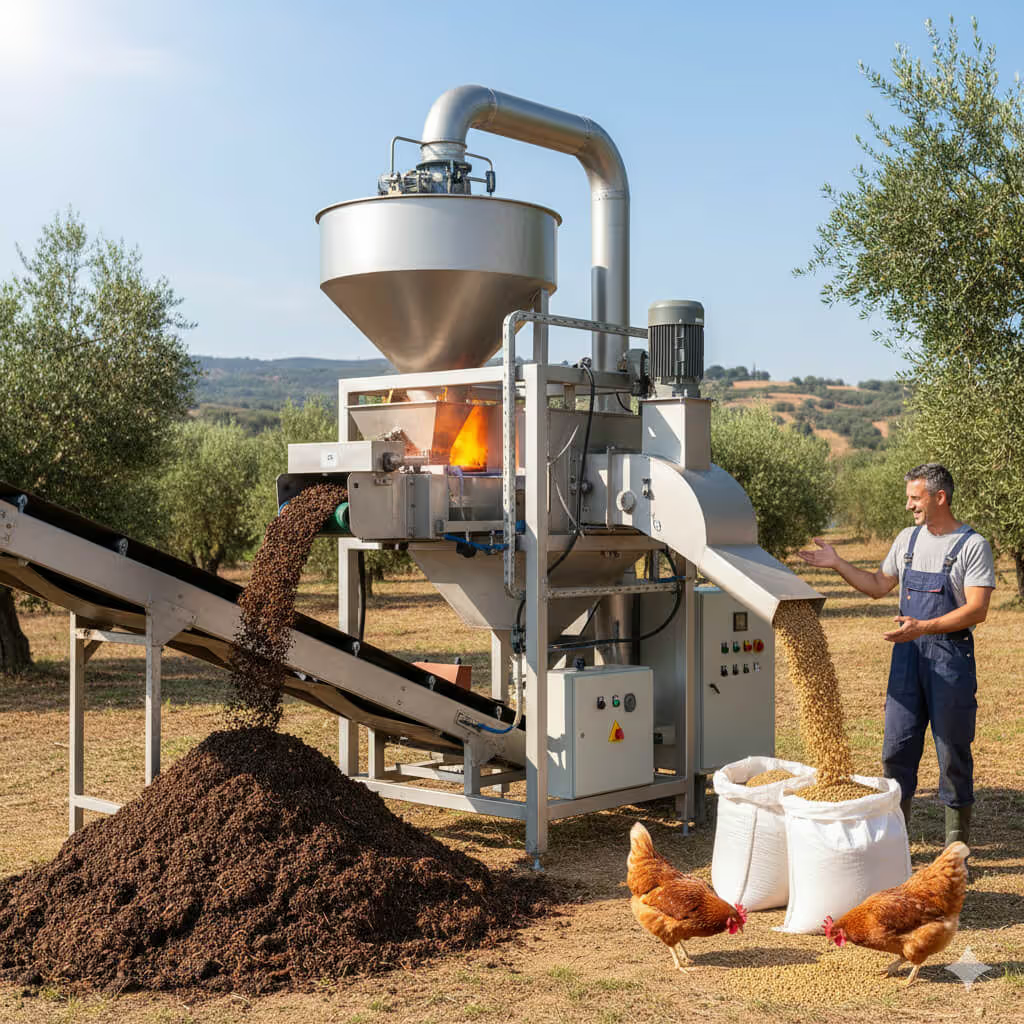
A new European project called "OLIWA" has recently been launched, bringing together several other countries bordering the Mediterranean Sea. The project's main goal is to take olive waste, such as the residue left over after oil extraction, and turn it into useful, high-value products. These include animal feed, food additives to improve nutritional quality, materials for packaging, and biogas that can be used to generate energy.
The project is built on an important principle known as the "circular economy", which means reusing and recycling everything so that, ultimately, no waste is left over. OLIWA seeks to develop new and lasting ways to make the most of everything related to the olive sector across six Mediterranean countries.
The project is led by the University of Turin in Italy, working alongside 25 partners from various countries including Italy, Spain, Greece, Turkey, Algeria and Tunisia. Among the partners is a specialised centre called "AIMPLAS", which works on environmentally friendly materials and packaging solutions.
The project aims to use olive-growing residues to produce several types of products. First, animal feed. Second, the extraction of natural compounds for use as food additives. Third, the manufacture of eco-friendly packaging materials. And fourth, energy generation through biogas.
The project is also exploring several innovative ideas, such as using olive residues as feed for insects, then converting these insects into meal (a protein-rich powder) used as nutrient-dense animal feed. The team is also working on extracting natural compounds from the residues for use as food additives, developing safe and sustainable packaging materials, and producing biogas by combining agricultural residues with animal or insect waste as a new, clean source of energy.
Those behind the project hope it will help cut food waste by at least 25%. They stress that this initiative marks a highly significant step towards making the olive industry more sustainable and innovative, as it transforms agricultural by-products that were once discarded into useful goods, while supporting the wider drive for recycling and the full utilisation of resources across the region.