 Advertise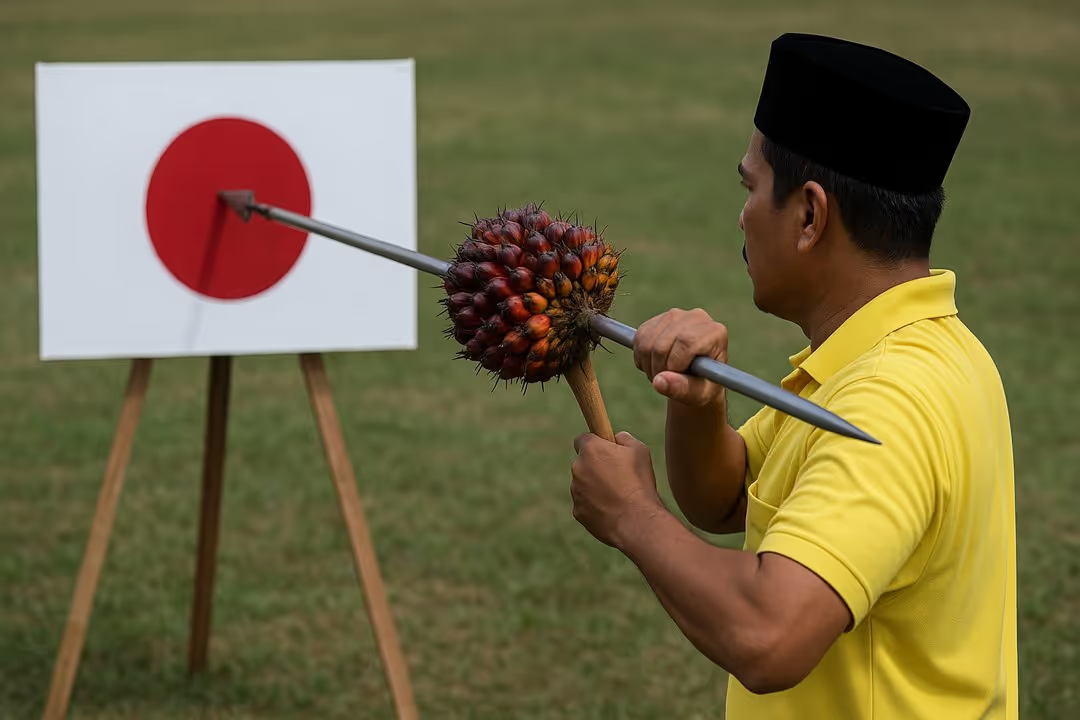
Malaysia is seeking to expand its value-added and processed palm-based products into Japan, particularly specialty fats, tocotrienols, red palm oil, and medium-density fiberboards made from palm waste for use in construction and furniture.
Malaysia’s Ministry of Investment, Trade and Industry (MITI) said in a statement on Friday that the country is accelerating efforts to position itself as a global leader in sustainable commodity certification through implementation of the Malaysian Sustainable Palm Oil (MSPO) 2.0 standard.
The ministry said the upgraded MSPO 2.0 standard was one of the key promotional themes at Expo 2025 Osaka under a promotional program organized by the Ministry of Plantations and Commodities (KPK).
The initiative reflects Malaysia’s commitment to making sustainable agriculture a core pillar of future trade and economic diplomacy.
Plantation and Commodities Minister Datuk Seri Johari Abdul Ghani said MSPO 2.0 is a clear statement to the world that Malaysia is serious about transforming its commodity sector in line with global sustainability standards.
He added that Malaysia is embedding sustainability principles at every level, from smallholder farms to export shelves, while raising integrity across the entire system.
He said Malaysia also aims for the MSPO model to be applied across all commodities.
During KPK Week at Expo 2025 Osaka, five strategic memoranda of understanding were signed across key commodity sectors, covering palm waste, sustainable pepper, kenaf innovation, and cocoa exports.
The ministry said this reflects Malaysia’s cross-sector push toward developing high-value and sustainable commodities.
Malaysia’s export credibility was also strengthened during the week through the recent collaboration between MSPO and AEON Japan.
The ministry said this represents a clear step toward increasing the visibility of certified products in direct-to-consumer retail, as palm oil products carrying the MSPO logo have begun appearing on shelves.
The Malaysian Palm Oil Board (MPOB), a research, development, and licensing agency under KPK, also signed agreements and explored trade opportunities for the palm oil commodity sector during the expo to strengthen trade development with Japan and the wider Asian region.
Currently, 86% of Malaysia’s oil palm plantations are certified under MSPO, while the country is targeting 95% certification by the end of 2025.
Under Budget 2025, RM50 million has been allocated to support nationwide MSPO implementation, including technical assistance, audit support, and traceability tools to help independent smallholders adapt more effectively.
Malaysia’s participation in Expo 2025 is led by MITI, with MSPO participating alongside more than 21 ministries and 70 agencies under a unified national framework.
The program is expected to include forums, product showcases, business-matching sessions, and memoranda of understanding throughout the 26-week event, strengthening Malaysia’s position as a future-ready trade and investment partner.
So far, Malaysia has achieved 68% of its RM13 billion target for trade and investment opportunities at Expo 2025.