 Advertise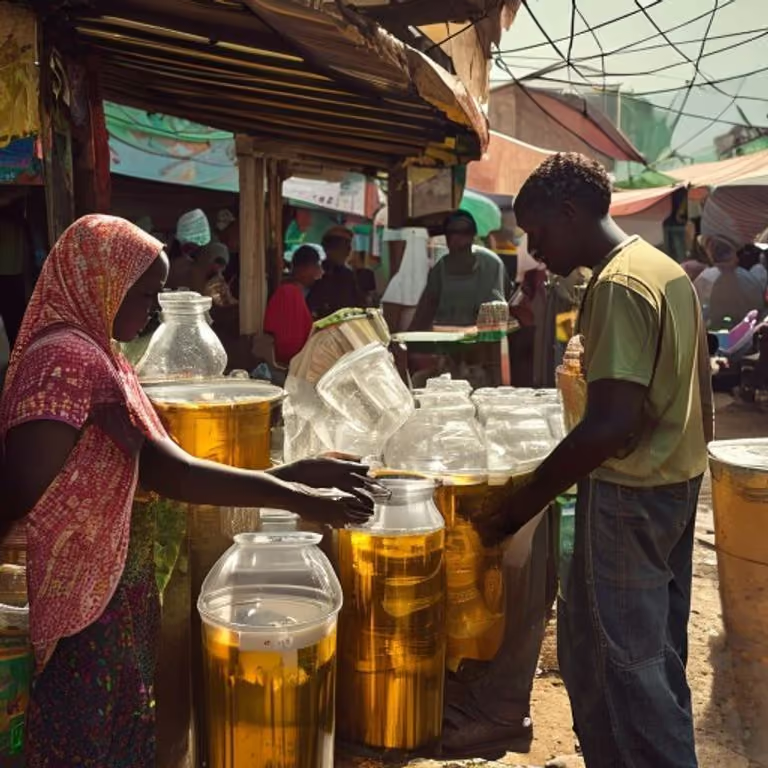
The Lagos State Environmental Protection Agency (LASEPA), in partnership with Ororo Waste Management Limited, the Shell Foundation, and the Waste Pickers Association of Nigeria (WAPAN), has inaugurated a two-day capacity-building program. This initiative aims to integrate approximately 250 waste pickers, market women, and youths into the formal used cooking oil (UCO) collection chain across Lagos.
The training sessions, conducted at the Lagos Chamber of Commerce and Industry (LCCI) in Alausa, Ikeja, attracted participants from various communities throughout the state, including members of WAPAN and young individuals from diverse ethnic backgrounds. The program's organizers stated that its core objective is to equip participants with the essential skills required for the safe collection, handling, storage, and transportation of UCO, thereby fostering sustainable livelihood opportunities.
This initiative is a crucial component of a broader strategic partnership between Ororo Waste Management and the Lagos State Government. The collaboration seeks to significantly expand household UCO collection throughout Lagos State, leveraging LASEPA's extensive network of 21 zonal offices.
Mr. Olaitan Dawodu, Director of Operations at Ororo Waste Management Limited, explained that his company initially concentrated on collecting used oil from commercial establishments such as restaurants and hotels. However, with the support of the Shell Foundation, this new phase strategically targets households through a structured, community-based supply chain model. Under this model, waste pickers will be responsible for collecting UCO from households, markets, and designated collection points. Subsequently, trained youths will conduct quality checks at community collection kiosks before the collected oil is channeled into the recycling process.
Dawodu emphasized the inclusive nature of the program, stating, "Every participant within the supply chain — including market women, waste pickers, and youths — will earn income for their respective roles." He further added, "This creates an inclusive circular economy that generates employment while protecting human health and the environment." Prior to the training, extensive sensitization campaigns were conducted across markets and communities to encourage participation and highlight how households could increase their income by contributing to UCO collection.
Dawodu also underscored the initiative's goal to educate residents about the health risks associated with repeatedly reusing cooking oil for food preparation and to promote proper disposal practices. He urged Lagos residents to utilize designated collection points located at LASEPA zonal offices, Laddo filling stations, participating markets, and other authorized centers. "Collective participation will support environmental sustainability while creating additional economic opportunities for Lagos residents," he affirmed.
Mrs. Adebiyi Atinuke, a facilitator for the program, observed a positive shift in public perception regarding the value of used cooking oil, noting that many residents initially doubted its income-generating potential. She highlighted that "The programme is designed to financially empower market women and youths, particularly young people seeking sustainable means of livelihood, while also contributing to improved public health through proper disposal of used cooking oil."
Participants received comprehensive training covering quality assurance, traceability, environmental best practices, and the significant economic value of UCO as a valuable feedstock for the production of Sustainable Aviation Fuel (SAF) and biodiesel. Atinuke advocated for sustained public enlightenment through targeted market campaigns and grassroots engagement to enhance awareness. She further confirmed that financial incentives are integral to the scheme, with residents receiving payment for every quantity of used oil they supply through the established collection network.
Source: Vanguard News