 Advertise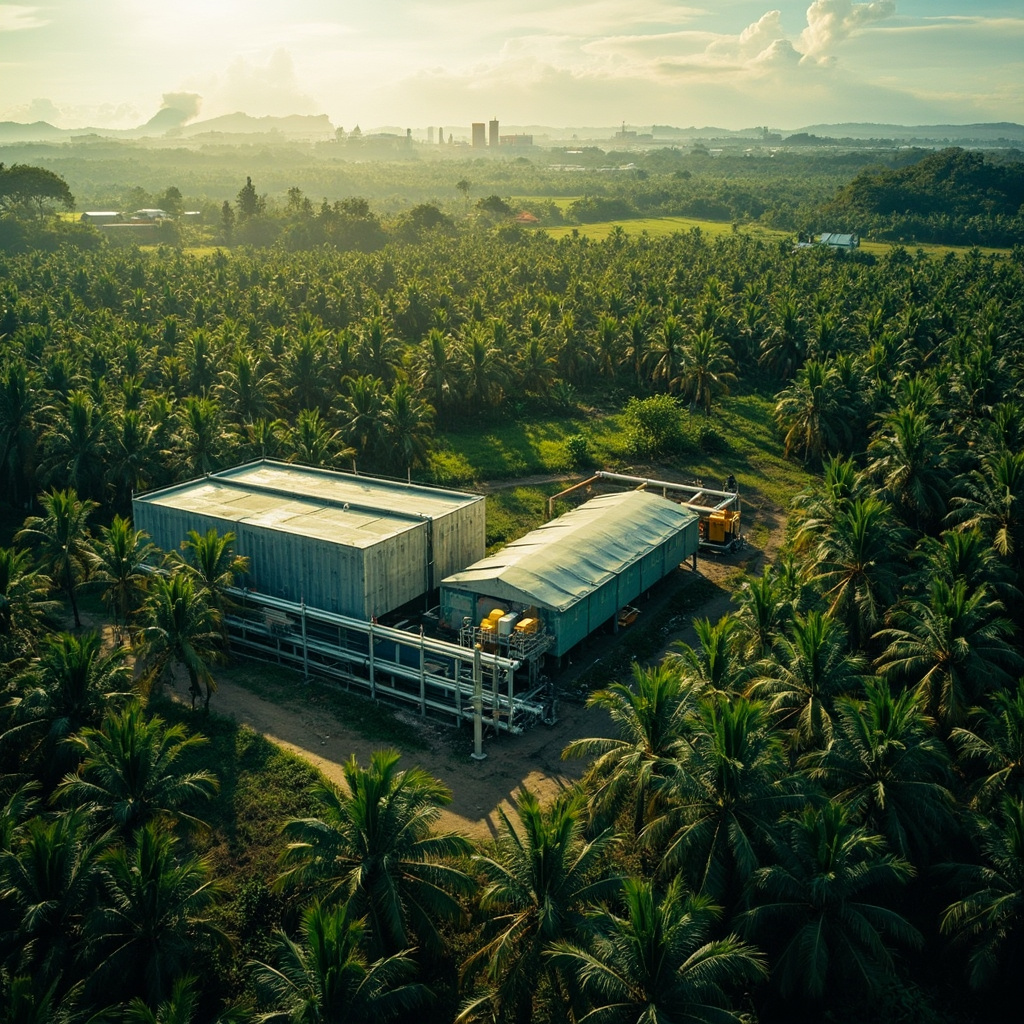
JAKARTA – Indonesia is set to revolutionize its palm oil industry by transforming an estimated 125 million metric tons of discarded liquid waste, known as palm oil mill effluent (POME), into a potent source of renewable energy. This strategic initiative aims to convert what has long been an environmental burden across Sumatra and Kalimantan's vast plantation belts into a valuable national asset, aligning industrial growth with critical decarbonization commitments.
The nation's extensive palm oil estates span approximately 41.5 million acres (16.8 million hectares), yielding an annual production of around 250 million metric tons (275.6 million US tons) of fresh fruit bunches. Given that every ton of processed fruit generates half a ton of POME, the archipelago confronts a yearly surplus of nearly 125 million metric tons (137.8 million US tons) of this organic feedstock. This vast wastewater reserve represents an untapped energy frontier for Southeast Asia's largest economy.
Capturing the methane gas emitted from open POME lagoons is expected to significantly curb greenhouse gas emissions, while simultaneously providing domestic electricity and bio-compressed natural gas (bio-CNG) to displace expensive fossil fuel imports. Erma Yulihastin, a researcher at the National Research and Innovation Agency (BRIN), stated on Monday, August 17, 2026, that 'POME contains high organic content and remains continuously available throughout mill operations.'
The conversion of effluent into biogas offers multifaceted environmental benefits. Covering wastewater ponds prevents raw methane from entering the atmosphere, reduces the chemical concentration in discharge ponds, eliminates unpleasant odors, and safeguards nearby water tables and arable soil. Erma highlighted that a single standard biogas capture installation can mitigate approximately 1,131 metric tons (1,247 US tons) of carbon dioxide equivalent per month.
Beyond direct environmental remediation, decentralized biogas facilities promise to lower electricity costs for remote processing mills and supply refined bio-CNG for local commercial fleets. The state-run Plantation Fund Management Agency (BPDP) is actively supporting end-to-end research for these solutions through its Palm Oil Research Grant (GRS) initiative, funding everything from plant designs and machinery installations to vehicle fuel trials.
According to Tungkot Sipayung, Executive Director of the Palm Oil Agribusiness Strategic Policy Institute (PASPI), advanced methane capture technology can convert one ton of POME into approximately 1,017 cubic feet (28.8 cubic meters) of biogas. When scaled across the nation's total processing volumes, the theoretical annual yield could reach an impressive 127.1 billion cubic feet (3.6 billion cubic meters) of biogas.
'This biogas can power electricity generators to meet the energy demands of the mills, employee housing, corporate facilities, and surrounding village communities,' Tungkot elaborated on Monday, adding that 'Surplus gas can also be commercialized directly to supply household distribution grids.'
Despite these significant commercial opportunities, Indonesia currently utilizes only 15% of its available POME capacity for bioenergy. To bridge this gap, Tungkot urged regulators to implement three crucial policy mechanisms: the establishment of a dedicated palm-based carbon crediting system, mandatory methane capture units at all domestic crude palm oil mills supported by targeted tax incentives, and the enforcement of blending quotas to integrate biogas into conventional fossil gas pipelines.
'If these three regulatory drivers are implemented, mills across the nation will construct methane capture infrastructure,' Tungkot affirmed. He predicted that 'The shift will expand gas supplies, bolster bio-electricity generation, slash emissions, and create a lucrative new revenue stream for palm oil producers.'
This drive to commercialize waste-to-energy solutions is integral to Jakarta's broader strategy to monetize decarbonization efforts and cultivate an internationally recognized green economy framework. President Prabowo Subianto, during his State of the Nation address to parliament on Friday, August 14, 2026, emphasized that ecological preservation has evolved into a strategic financial asset. His administration has operationalized the Carbon Unit Registry System (SRUK) and an exchange-traded carbon bourse, designed with global verification benchmarks, enabling high-emitting industrialized nations to finance Indonesia's conservation and mitigation initiatives.
President Prabowo stated during his annual parliamentary address: 'The green economy must deliver tangible benefits to our people. We are protecting our forests and cutting carbon emissions, and high-emitting nations are prepared to compensate us. We are building this framework to create real added value for our citizens.'
To ensure that bioenergy and industrial abatement projects generate verifiable carbon credits, the Ministry of Environment and the Environmental Control Agency (KLH/BPLH) are intensifying oversight across the entire credit lifecycle, from registration and validation to trading and retirement. For palm oil operators considering capital investments in methane capture systems, a transparent carbon registry coupled with performance-based payment schemes could significantly alleviate initial costs, transforming wastewater management from a regulatory obligation into a high-integrity, revenue-generating green asset.
Source: InvestorTrust