 Advertise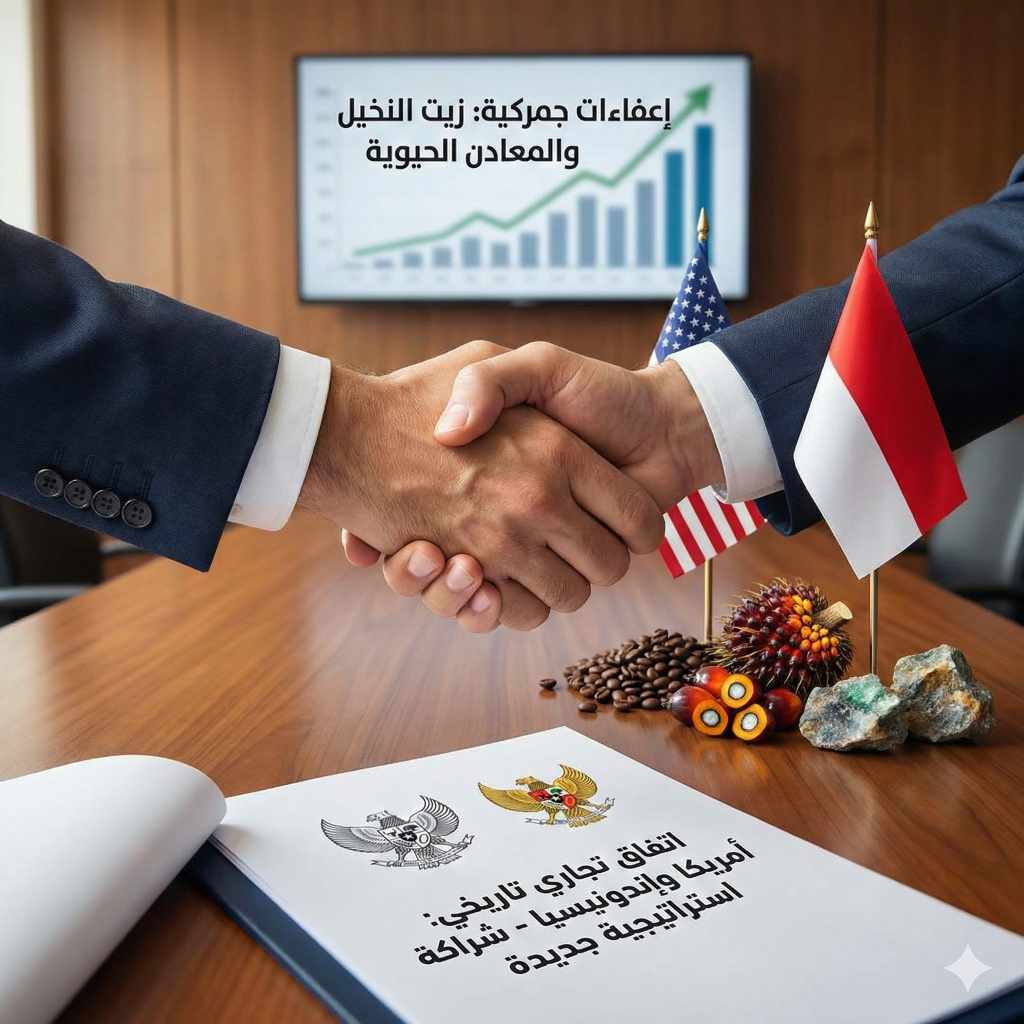
Indonesia and the United States have finalised a trade deal cutting US tariffs to 19% from 32% on goods from Southeast Asia's largest economy, with Jakarta securing exemptions for palm oil, its top export, along with several other commodities.
The agreement was signed in Washington by Indonesia's chief economic minister, Airlangga Hartarto, and US Trade Representative Jamieson Greer, following months of negotiations.
"This agreement respects the sovereignty of both countries," Airlangga said during an online press conference, describing the deal as "mutually beneficial".
Palm oil was a particularly significant exemption, as it accounts for around 9% of Indonesia's total exports. Airlangga added that Indonesian coffee, cocoa, rubber and spices would also be exempt from tariffs.
Deal comes after difficult start to 2026
The 19% rate puts Indonesia on par with US agreements struck with Southeast Asian competitors such as Malaysia, Cambodia, Thailand and the Philippines. Vietnam, however, faces a slightly higher rate of 20%. Malaysia, another major palm oil exporter, also enjoys a tariff exemption for the product, as well as for cocoa and rubber.
The agreement comes after a difficult start to the year for Indonesian markets. Setbacks have included a warning last month from index provider MSCI that the stock market risks being downgraded to "frontier" status over transparency concerns, as well as Moody's cutting the outlook on the country's credit rating two weeks ago, citing reduced predictability in policymaking.
Yose Rizal Damuri, executive director of the Centre for Strategic and International Studies (CSIS) in Indonesia, said investor confidence could improve if Jakarta uses the US agreement as a springboard for further reform. "If Indonesia can multilateralise some of its commitments to the United States and use them as a basis for rolling back regulatory restrictions, that would boost confidence in Indonesia, and this is something that should be leveraged and built upon," he added.
Indonesia to accept US product standards
Under the agreement, Indonesian textile products will face a 0% tariff under a quota mechanism still under discussion. The quota will be determined based on the volume of US inputs, such as cotton and synthetic fibres, used in the textiles.
Airlangga said the United States had dropped demands to add non-economic provisions to the agreement, including those related to nuclear reactor development and the South China Sea.
In return, Indonesia will remove tariff barriers on most US products across all sectors and address a range of non-tariff barriers, such as local content requirements, according to a White House fact sheet. Jakarta will also accept US product standards relating to vehicle safety, emissions, medical devices and pharmaceuticals.
Deal aims to support US interests in critical minerals
The agreement also appears to target what analysts describe as concerns in Washington over China's tight grip on many critical minerals, and the relocation of Chinese company operations to countries such as Indonesia.
Under the agreement, Indonesia will impose restrictions on "excess production" by foreign-owned mineral processing facilities by ensuring output aligns with Indonesian mining quotas. These minerals include nickel, cobalt, bauxite, copper and manganese. Jakarta has also agreed to take action against companies owned or controlled by foreign states operating within its jurisdiction when their practices harm US commercial interests.
Indonesia will work to facilitate US investment in critical minerals and energy resources, as well as cooperate with US companies to accelerate the development of its rare earths sector. Airlangga said the agreement is set to take effect 90 days after both sides complete the relevant legal procedures, adding that changes could be made if both sides agree.
President Prabowo Subianto travelled to Washington to seal the deal and attend the first meeting of leaders of US President Donald Trump's "Peace Council". Prabowo and Trump signed a document on Friday titled "Implementing the Agreement Towards a New Golden Era of the US-Indonesia Alliance", which the White House said would help both countries strengthen economic security and growth. Earlier this week, Indonesian and American companies signed deals worth $38.4 billion.
Source: Reuters