 Advertise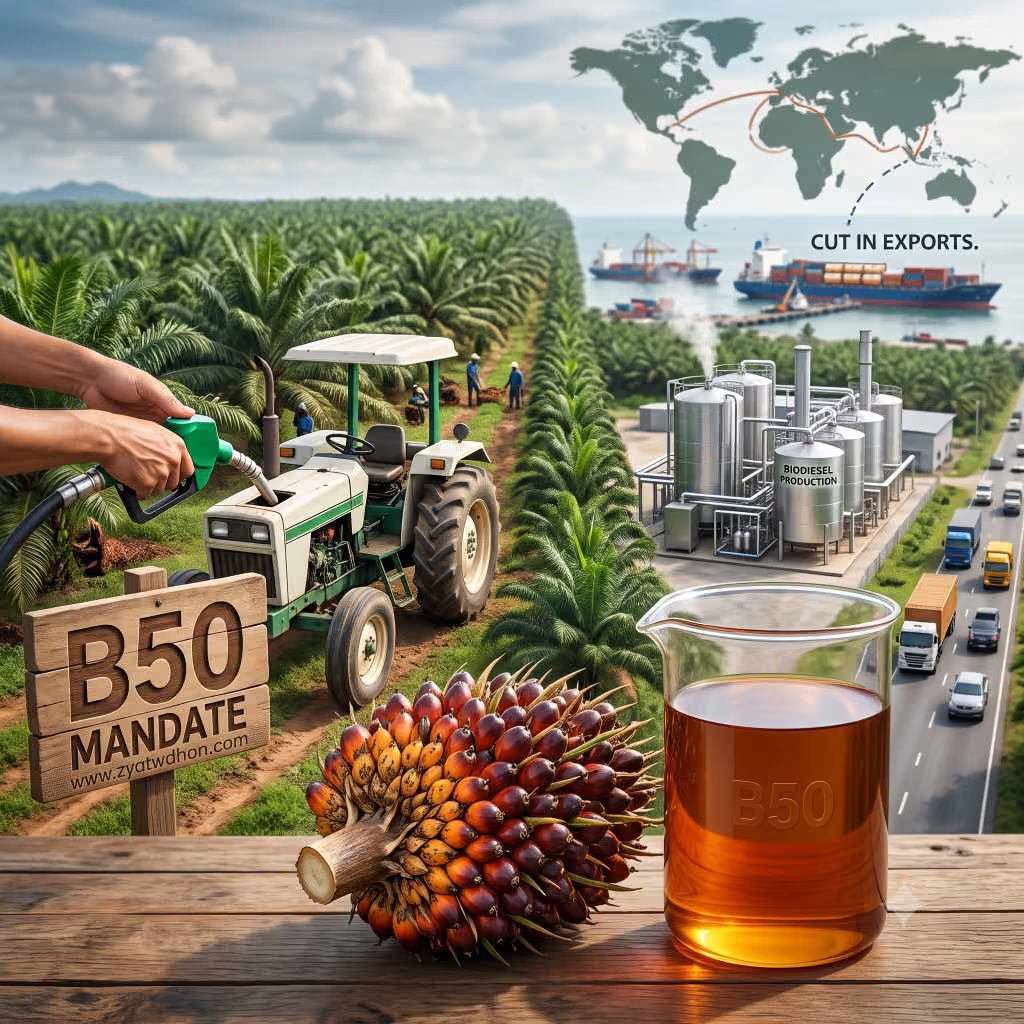
The government of Indonesia is moving forward with its ambitious B50 biodiesel initiative, a policy aimed at drastically trimming the nation's reliance on foreign diesel supplies. However, this shift toward domestic clean energy comes with a substantial trade-off, as a significant volume of crude palm oil (CPO) will be redirected from global markets to domestic fuel production, potentially cutting the country’s annual palm oil export earnings by an estimated $2.7 billion.
This aggressive blending standard mandates that biodiesel contain 50 percent palm oil. Following an extensive eight-month testing and trial phase, the policy entered its gradual, phased implementation on July 1.
Projections provided by the Indonesian Palm Oil Association (Gapki) outline the immediate structural impacts of this policy. According to the industry group, the heightened domestic demand from the B50 initiative is expected to absorb an additional 2 million metric tons of crude palm oil in the second half of this year alone, pulling that volume directly out of the country's export pool. Looking at the long-term annual impact, Gapki estimates that the total extra volume required to sustain the mandatory domestic blend could approach nearly 4 million metric tons.
To illustrate the financial impact of this shift, economists and industry analysts point to the market pricing observed during the first quarter of 2026, where the average CIF Rotterdam palm oil price hovered around $1,356 per metric ton. Removing 2 million metric tons of supply from global trade routes under these price levels translates to an estimated $2.7 billion in forgone export revenues for the Southeast Asian nation.
The timing of this energy transition raises concerns among macroeconomic analysts. Achmad Nur Hidayat, an economist affiliated with UPN Veteran Jakarta, emphasized the critical need for a meticulous and ongoing review of the policy, particularly given the recent softening of Indonesia’s trade performance. He highlighted that the nation recorded a trade deficit of $1.6 billion in May, an event that effectively shattered a remarkable six-year streak of consecutive monthly trade surpluses.
Furthermore, palm oil holds immense strategic social value within Indonesia, serving as the primary feedstock for cooking oil used daily by millions of domestic households. Achmad explained that for the B50 mandate to truly deliver a positive net impact on Indonesia's external balance, the financial savings secured by cutting foreign diesel imports must comprehensively outweigh the combined weight of lost palm oil export revenues, the fiscal burden of funding biodiesel subsidies, and the domestic market risks of inflating local cooking oil prices.
The core motivation behind pushing the B50 standard is widely seen as justified, given Indonesia's historical vulnerability to volatile global diesel import costs. Whenever international crude oil prices spike, the national budget faces severe pressure due to expanding trade deficits in the oil and gas sector alongside escalating energy subsidy costs.
To mitigate these risks, Achmad recommended that the government move away from a rigid, unchanging 50 percent mandate. Instead, he proposed implementing a highly flexible framework capable of dynamically adjusting the mandatory biodiesel blending percentages based on real-time factors. This flexible mechanism would actively account for current domestic CPO reserves, prevailing cooking oil prices, international trade trends, and the broader national trade balance. Under such a system, if domestic supplies tighten and consumer food prices begin to surge, the biodiesel blend could be lowered to ease pressure. Conversely, during periods of surplus domestic production or weakening export prices, the biodiesel mandate could be safely scaled up to absorb the extra supply.
Source: Jakarta Globe