 Advertise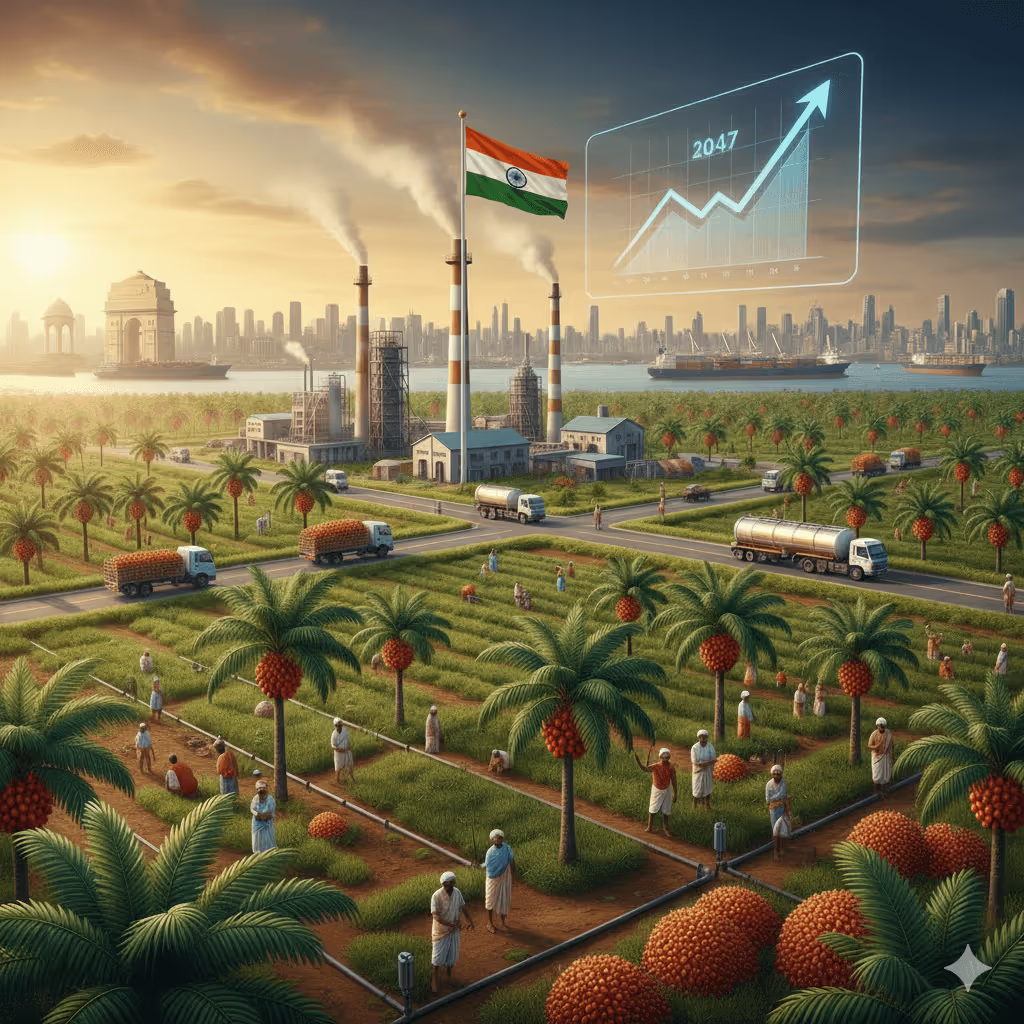
Solidaridad Asia, in collaboration with the Solvent Extractors’ Association of India (SEA) and the Asian Palm Oil Alliance (APOA), launched a research-backed paper titled India’s Path to Palm Oil Self-Sufficiency.
The paper presents a comprehensive strategy to reduce India’s heavy dependence on palm oil imports, strengthen domestic production, and achieve up to 50% self-sufficiency by 2047. It argues that this could save trillions of dollars in import costs while improving farmer incomes and environmental sustainability.
India, the world’s largest palm oil importer, imported 8.9 million metric tonnes in 2023, representing 21% of global imports, while domestic production met less than 5% of demand. With vegetable oil demand expected to reach 66.8 million metric tonnes by 2047, the paper warns of a possible 40 million tonne supply gap if domestic production does not expand.
Dr. B. V. Mehta, Executive Director of SEA, said India’s pursuit of edible oil self-sufficiency is both a national necessity and a collective responsibility. He emphasized that palm oil stands out among vegetable oils because of its affordability, versatility, and role in meeting food and industrial needs.
Economic Resilience
The paper notes that oil palm is a highly profitable crop, with a benefit-cost ratio of 1.49 compared with 1.03 for rice and 1.13 for cotton. In states such as Andhra Pradesh, shifting from low-return cropping systems to oil palm could increase farmer profits by INR 30,000 to INR 150,000 per hectare annually.
Multi-Sector Growth
An expanded palm oil value chain could generate an additional cumulative output of INR 15 trillion by 2047 and create significant new employment opportunities. The report says these gains could empower rural households, strengthen livelihood security, and support regional economic development.
Environmental Benefits
Because oil palm has high yields per hectare, its emissions per unit of oil can be lower than soybean, sunflower, and rapeseed oils. In non-peat areas such as India, emissions can be among the lowest globally at 1.44 kg of CO2 per kg of oil, compared with 3.45 kg for soybean and 3.32 kg for sunflower.
The paper adds that better land-use planning and methane capture from palm oil mill effluent could reduce emissions further, positioning palm oil as a climate-smart oilseed option.
Food Security
The report highlights palm oil’s role in food security, especially in developing economies. Studies from Indonesia and Costa Rica show that a shift to oil palm cultivation increased household calorie consumption by 13% and improved access to nutritious foods.
Dr. Shatadru Chattopadhyay, Managing Director of Solidaridad Asia, said India’s push toward palm oil self-sufficiency is not only about economic resilience, but also about local innovation that can transform rural livelihoods and strengthen food security.
To reach the target, the paper proposes a five-point action plan:
APOA Chairman Atul Chaturvedi said a self-reliant India is essential for regional development and that the paper offers strong evidence for South-South cooperation, especially through lessons from Indonesia and Malaysia.
Key recommendations include strengthening research through IIOPR regional centers, integrating the Indian Palm Oil Sustainability framework into NMEO-OP, encouraging regenerative agriculture, and expanding partnerships for nurseries, mills, centers of excellence, input distribution, and mechanization services.
The report concludes that successful integration of smallholders into palm oil value chains is critical and should be supported through affordable credit, secure land rights, and specialized advisory services.