 Advertise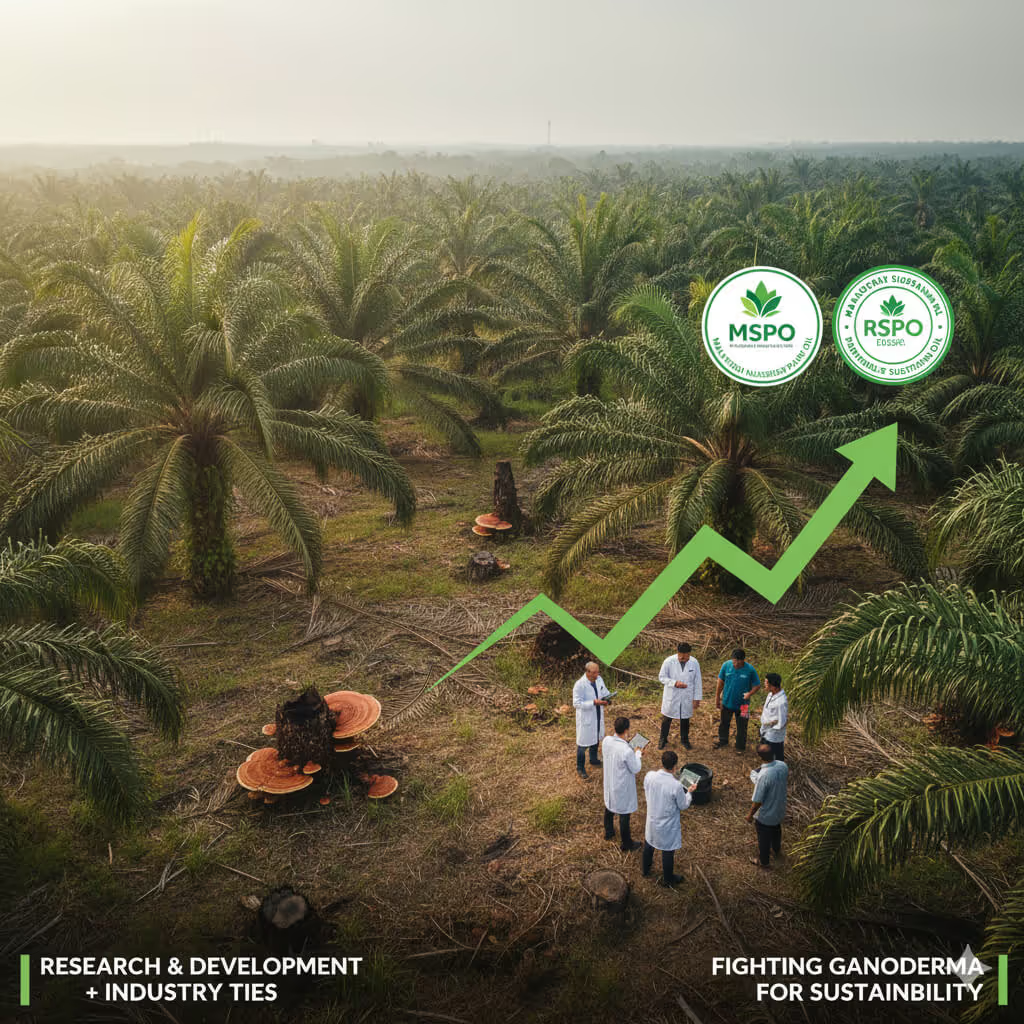
The Malaysian Palm Oil Board (MPOB) reaffirmed its commitment to tackling Ganoderma, the most destructive disease affecting the country’s palm oil sector, by strengthening research collaboration and increasing industry engagement.
Opening a workshop organized by the Sarawak Oil Palm Plantation Owners Association (SOPPOA) and MPOB on Ganoderma, MPOB Director-General Datuk Dr. Ahmad Parveez Ghulam Kadir praised SOPPOA for taking the initiative to address the urgent issue.
He said Ganoderma, which causes basal stem rot, is not a new enemy of Malaysia’s palm oil industry. It remains the most destructive and economically damaging disease, reducing yields, shortening plantation lifespans, and increasing replanting costs.
MPOB studies have shown infection rates exceeding 20% in some mature plantations, implying potential yield losses worth hundreds of millions of ringgit annually if left unmanaged.
Ahmad Parveez said this is not just a plantation issue, but a national economic concern, as palm oil contributes up to RM60 billion in export revenue annually and supports smallholders, plantation companies, and national GDP.
He noted that MPOB has prioritized Ganoderma research for more than three decades, investing in detection technologies, resistant planting materials, improved agronomic practices, and biological control agents.
The board has also developed a standard operating procedure for Ganoderma management, providing practical guidance on early detection, sanitation, and integrated control.
Ahmad Parveez said research and guidelines can only deliver results when applied on the ground. Workshops like this are crucial for transferring knowledge from the laboratory to the field and from researchers to growers.
He stressed that Ganoderma management is also essential for Malaysia’s sustainability requirements, as international buyers assess palm oil not only for environmental impact but also for long-term resilience.
If yields decline because of Ganoderma, pressure may increase to open new land, raising concerns over deforestation and biodiversity loss. By strengthening Ganoderma management, Malaysia also protects its sustainability credentials, supports certification schemes such as MSPO and RSPO, and aligns with broader responsible development goals.
He urged participants to engage actively, share plantation experiences, adopt integrated and biological practices, and take a long-term approach to disease control.
MPOB is ready to work alongside SOPPOA and industry players to ensure research findings are translated into practical field solutions, he said.
SOPPOA chairman Joseph Blandoy said the two-day workshop serves as a platform for MPOB to report progress in research and development, with a focus on the unique challenges facing Sarawak’s palm oil industry.
He said the program also allows knowledge sharing on monitoring, treatment, and control of pests and diseases, with Ganoderma highlighted as a priority.
With cases rising sharply not only in second-cycle plantations but also among young palms, particularly on peat soils, he said the need is urgent and clear. This year’s workshop is fully dedicated to Ganoderma to equip operators with the tools needed to identify, treat, control, and monitor the disease more effectively.
The workshop brings together plantation owners, researchers, and industry stakeholders to develop strategies for combating Ganoderma, which remains the most destructive disease in the palm oil sector.