 Advertise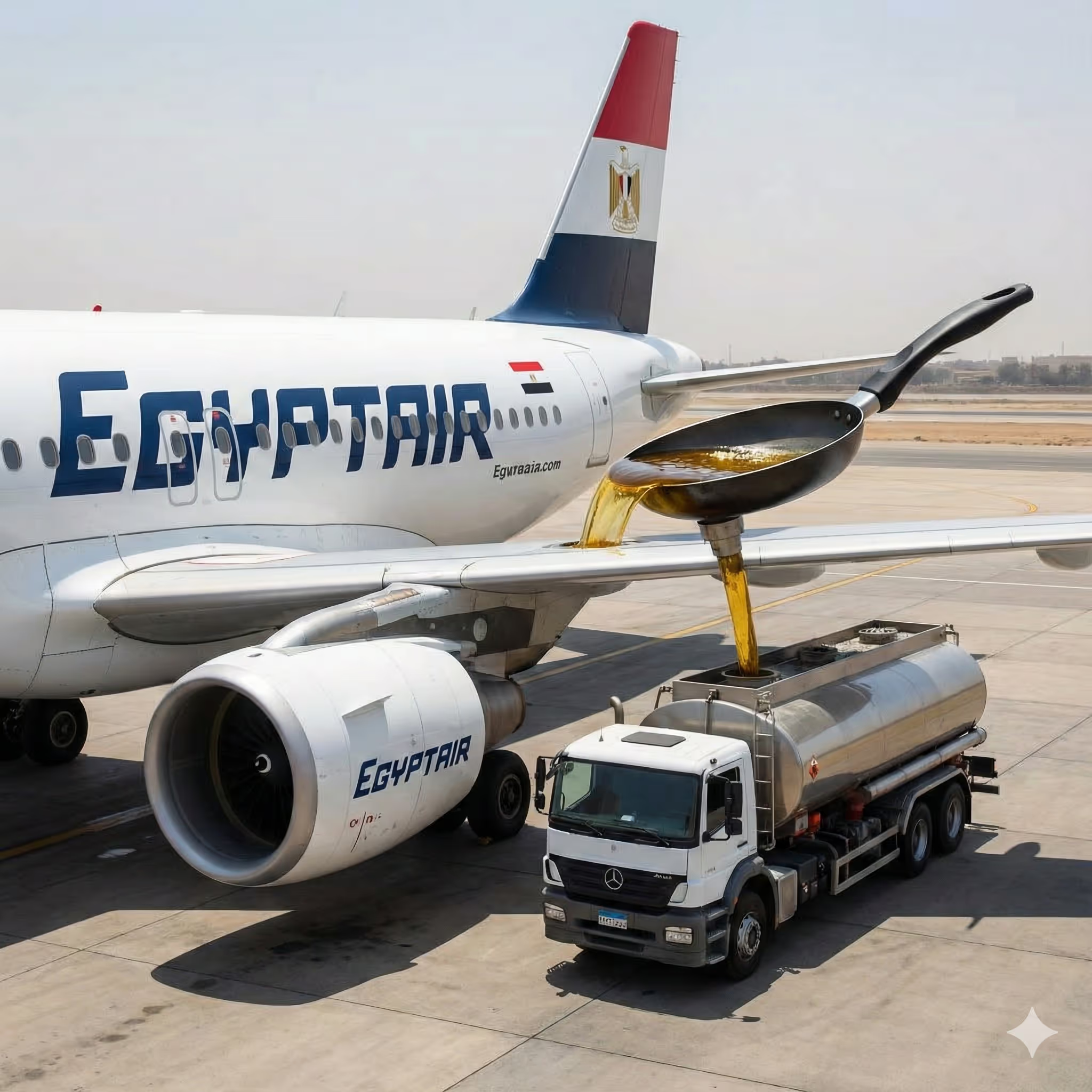
In a step aimed at maximizing the added value of waste and converting it into clean energy, Egypt’s Minister of Petroleum and Mineral Resources, Karim Badawi, witnessed the signing of a license agreement for a new project to convert used cooking oil into sustainable aviation fuel (SAF).
The project, to be established in Alexandria, is based on advanced technology that uses used cooking oils as a main production feedstock. It will have a production capacity of up to 120,000 tonnes per year of green fuel.
The project is expected to directly reduce carbon dioxide emissions by 400,000 tonnes annually and support Egypt’s environmental and economic commitments.
Partnership and signing details: The agreement was signed between the Egyptian Sustainable Aviation Fuel Company (ESAF) and technology provider Honeywell UOP.
The contract was signed by Dr. Tamer Heikal, Chairman of ESAF, and Matt Spalding, Vice President of Energy and Sustainable Solutions at Honeywell, in the presence of petroleum-sector leaders, including Engineer Ibrahim Mekki, Chairman of the Egyptian Petrochemicals Holding Company, and Khaled Hashem, President and CEO of Honeywell in the region.
Specialized oil-processing technology: The two sides confirmed that the project relies on a Honeywell UOP license, one of the world’s leading technologies for processing used oils.
The technology is distinguished by its ability to:
The petroleum minister described the project as a top economic priority, being the first of its kind in Egypt to convert this type of waste, namely used cooking oil, into a strategic product that supports the transition to green energy.