 Advertise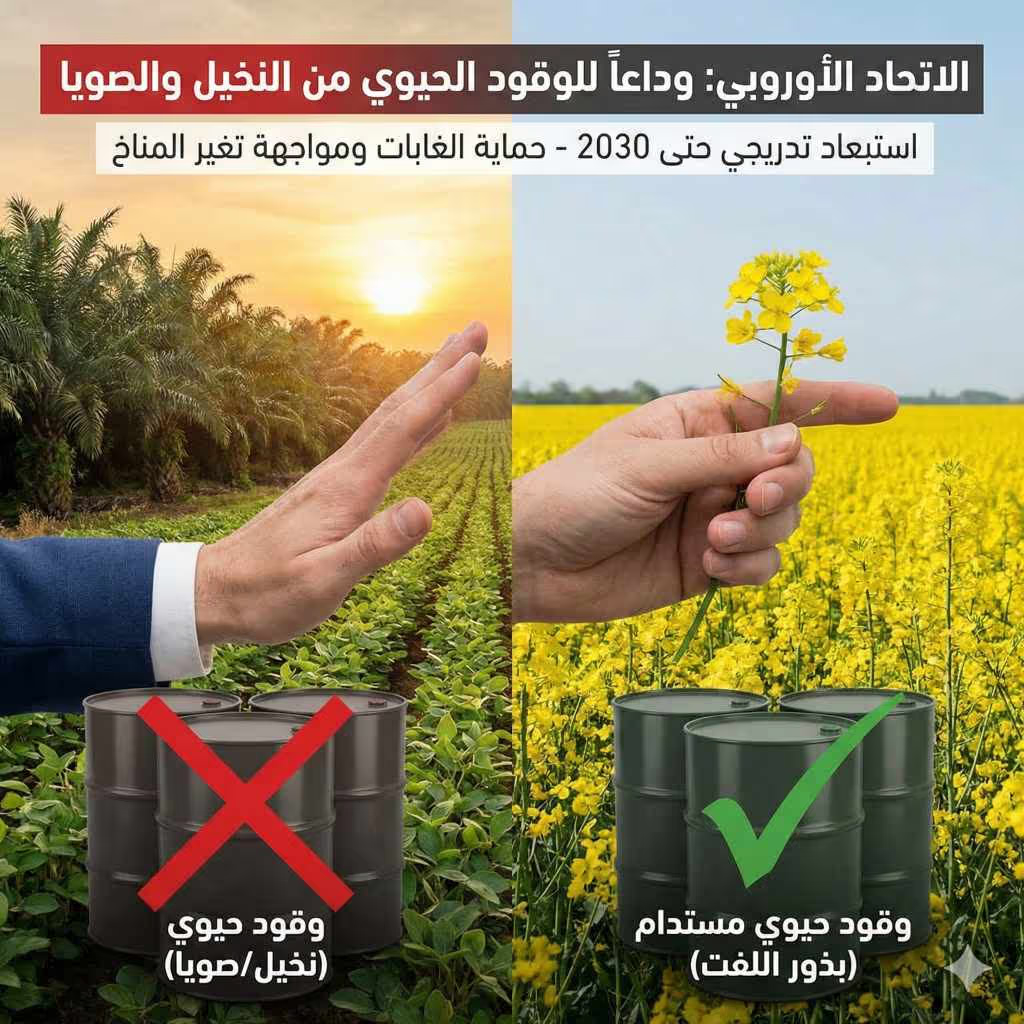
Biofuels International magazine reported that the European Commission has launched a public consultation on a draft amendment proposing the phased exclusion of biofuels derived from palm oil and soybean oil by 2030.
The report, published on 9 February, noted that under the proposed amendment to Delegated Regulation (EU) 2019/807, companies subject to the EU's renewable energy quotas would no longer be able to count biofuels produced from these feedstocks towards their obligations after that date.
The draft regulation sets out a gradual reduction in the eligibility of palm- and soy-based biofuels from 2025 onwards, with interim thresholds of 71.4% in 2025, 42.8% in 2027 and 14.3% in 2029, measured as a share of gross final energy consumption.
From 2030 onwards, rapeseed oil will become the sole cultivated biomass oil source eligible for quota compliance.
The magazine noted that several member states, including France, the Netherlands and Germany, have already moved ahead of this timetable by excluding palm oil-based biofuels from their national programmes since 2023.
The proposed exclusion of soybean oil was based on findings published by the European Commission on 20 January in its report to the European Parliament and the Council on the global expansion of food and feed crop production (COM(2026) 36 final).
The report, prepared by consultancy Guidehouse, assessed changes in global cropland areas and their impact on land with high carbon stocks, including primary forest areas.
The European Commission concluded that palm oil and soybean are feedstocks associated with high risk of indirect land-use change (iLUC). The report stated that, for this reason, soybean meal, in addition to soybean oil, was considered economically linked to agricultural expansion and environmental risk.
Germany's Union for the Promotion of Oil and Protein Plants (UFOP) has rejected the classification of soybean as a high-risk feedstock for indirect land-use change.
According to the union, the blanket classification would affect soybean cultivation as a whole, including production in the United States or in Europe, and the move would undermine increasingly strict sustainability certification requirements, particularly the obligation to provide dated proof of land use.
The union said the implications of classifying soybean itself, rather than soybean oil as is the case with palm oil, as a high-risk feedstock had not been adequately considered.
According to the union, the expansion of soybean cultivation is primarily driven by soybean meal, and the blanket classification would eliminate a key market outlet in the biofuels sector, including for German and European soybean producers.
The European Commission has invited stakeholders to review the proposal and take part in the consultation process.
Source: Biofuels International