 Advertise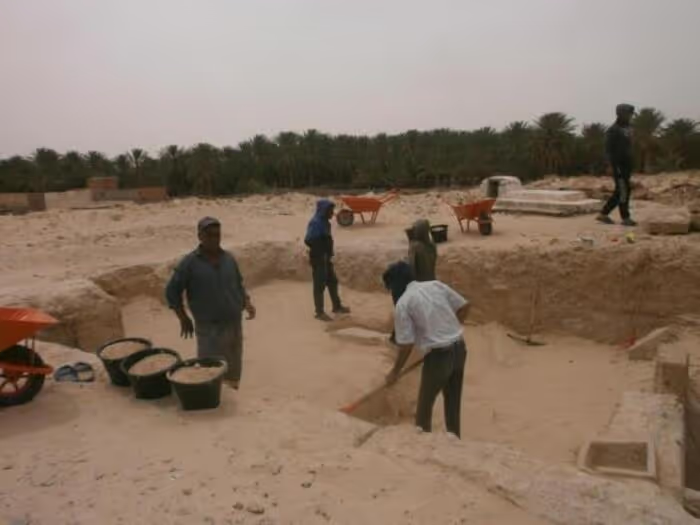
Archaeological discovery in Tunisia at a site already proposed for UNESCO World Heritage listing
Technology and Research
Tunisian archaeologists recently discovered an olive oil mill dating back to the late Roman era at the Beshni site in Kebili Governorate.
Ongoing excavations in this small area revealed an ancient olive oil extraction facility believed to date from between the third and seventh centuries AD, based on pottery fragments found at the site.
Archaeologists described the discovery as important because it confirms the existence of an olive mill in a desert area that is not currently known for olive cultivation.
One archaeologist said the discovery is unprecedented, as the Beshni site does not appear on maps or in geographical atlases. The mill, he added, represents evidence of historical olive cultivation in a desert region during antiquity.
The discovery strengthens evidence of a Roman settlement on the edges of the empire, along what is known as the Limes, the line that formed the southern frontier of Roman territory.
Tunisia proposed the project Frontiers of the Roman Empire: Limes of Southern Tunisia for inclusion on the UNESCO World Heritage List on February 17, 2012.
Tunisia’s nomination file highlights that the structures forming the Roman frontier in southern Tunisia have retained their authenticity, and that rare restoration work or temporary reuse has not compromised their integrity.