Sudan is one of the most important African countries in vegetable oil production, possessing vast agricultural areas and significant potential in oilseed crops such as sesame, groundnut, cotton and sunflower. Sudan’s population is around 48 million (2023 estimates), which creates continuous demand for oils and fats to meet the needs of the domestic market.
Sudan’s Exports, Imports, Production and Consumption of Oils and Fats
The data below is based on the latest statistics for 2023, and reflects the balance between domestic consumption and production capacity, in addition to a partial reliance on imports:
Domestic consumption: 464 thousand metric tons
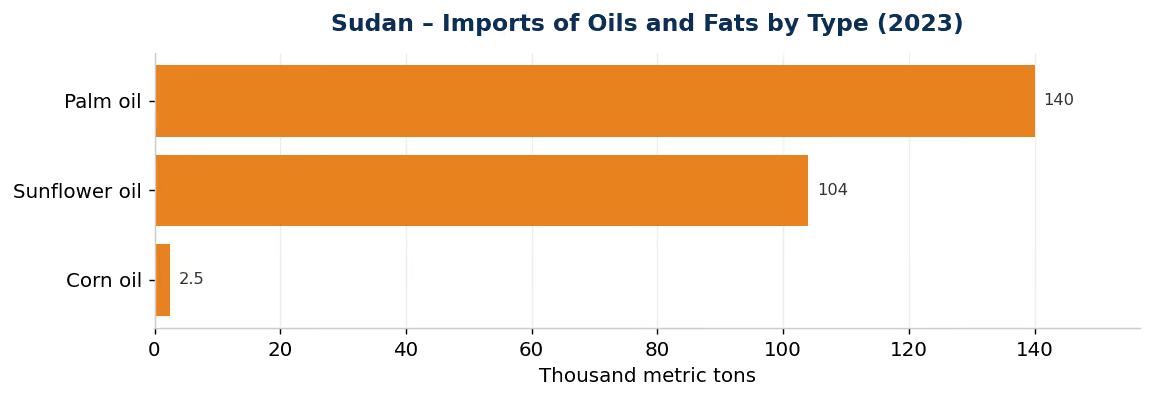
Imports: 247 thousand metric tons
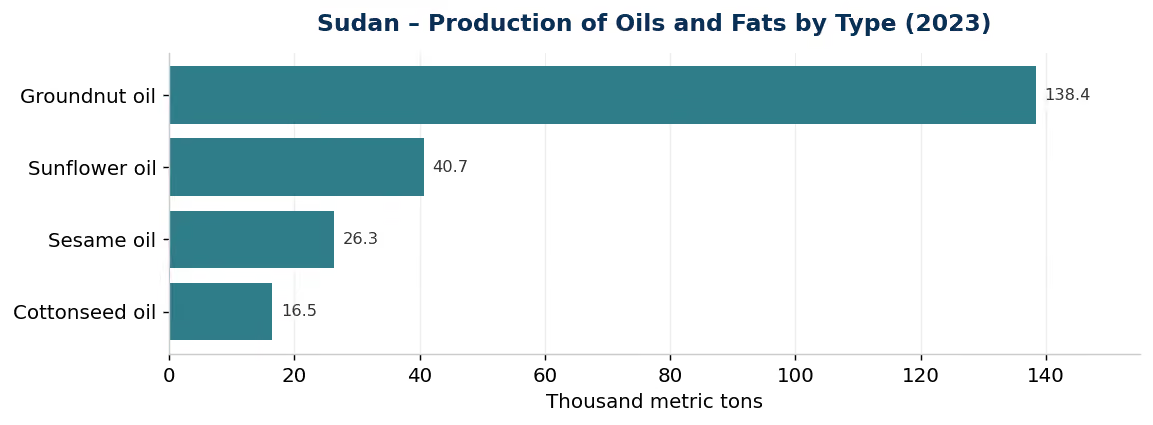
Domestic production: 222 thousand metric tons
Exports: 8 thousand metric tons
These figures indicate a gap between consumption and production that is partially covered through imports, with limited export activity.
Historical Analysis for the Period 2019 to 2023
The chart below illustrates the key indicators for the oils and fats market in Sudan over the past five years:
Key Observations
Fluctuation in consumption: it reached its highest level in 2020 (510 thousand metric tons), then declined gradually until it reached 464 thousand metric tons in 2023.
A rise in imports in 2020: this may be due to additional needs to meet consumption or to compensate for a shortfall in domestic production.
Relative stability in production: it ranged between 222 and 245 thousand metric tons during the period, with a slight improvement in some years.
Decline in exports: they fell from 42 thousand metric tons in 2020 to 8 thousand metric tons in 2023, indicating a greater focus on meeting the domestic market or changes in prices and trade policy.
Consumption
Total consumption: 464 thousand metric tons in 2023.
The limited volume of exports compared to domestic production and consumption.
The competitiveness of foreign markets and its impact on prices.
The need to develop supply chains and logistics operations to increase Sudan’s export capacity.
Recommendations
Increase domestic production: focus on improving the productivity of oilseed crops such as groundnut, sesame and sunflower through investment in research and development and modernizing farming methods.
Diversify oils: support the cultivation of other crops or expand current crops to reduce reliance on imports.
Improve logistics and manufacturing capacity: build modern storage, refining and processing facilities that ensure product quality and lower production costs.
Develop export policies: provide incentives for exporters and administrative facilities to increase the competitiveness of Sudanese oils in regional and global markets.
Conclusion
The oils and fats market in Sudan reflects a mix of opportunities and challenges. Domestic production remains relatively large thanks to the availability of oilseed crops such as groundnut and sesame, but rising consumption requires additional imports. With supportive government policies and private-sector investment in agriculture and manufacturing, this sector could see greater growth in the future and contribute to strengthening food security and improving the overall economic situation in Sudan.
 Advertise