The Sultanate of Oman enjoys a strategic location linking the Gulf region with the Arabian Sea, giving it competitive advantages in import and export. With the Sultanate’s population reaching around 5 million (2023 estimates), the oils and fats sector is seeing continuous growth, both in terms of domestic consumption and re-export to regional and international markets.
Oman’s Exports, Imports, Production and Consumption of Oils and Fats
The data for 2023 shows the extent of the domestic market’s reliance on imports to meet consumption needs, and at the same time highlights Oman’s role as a re-export hub, leveraging its advanced logistics infrastructure.
Domestic consumption: 112 thousand metric tons
Imports: 303 thousand metric tons
Domestic production: 68 thousand metric tons
Exports: 241 thousand metric tons
These figures indicate a gap between consumption and production that is offset through imports, while a large part of the imported or locally refined oils is re-exported.
Historical Analysis for the Period 2019 to 2023
The chart below illustrates the development of the consumption, imports, production and exports indicators over the past five years:
Key Observations
Growth in consumption in 2023: it rose from 92 thousand metric tons in 2022 to 112 thousand metric tons in 2023, which may indicate a recovery in economic activity and increased domestic demand.
A leap in imports: they moved from 247 thousand metric tons in 2022 to 303 thousand metric tons in 2023, confirming the pivotal role of imports in meeting domestic needs and in re-export.
Expansion in domestic production: although still limited compared to imports, production rose from 38 thousand metric tons in 2022 to 68 thousand metric tons in 2023, indicating efforts to strengthen domestic manufacturing capacity.
An increase in exports: exports rose from 205 thousand metric tons in 2022 to 241 thousand metric tons in 2023, reinforcing Oman’s position as a re-export hub in the region.
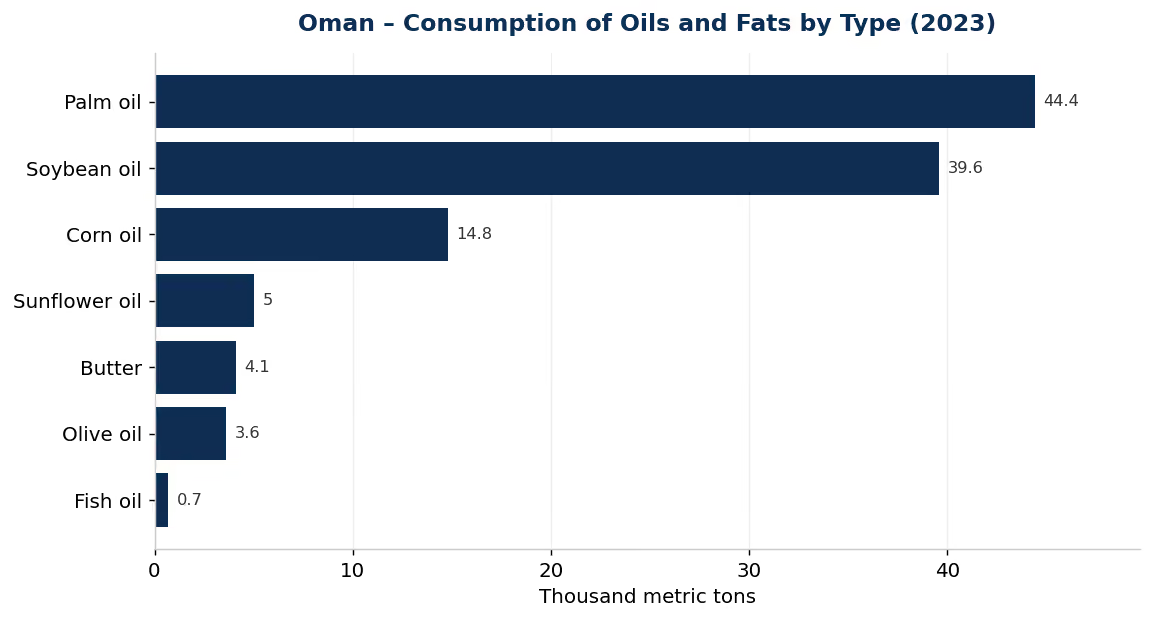
Consumption
Total consumption: 112 thousand metric tons in 2023.
Leading oils consumed:
soybean oil (40 thousand metric tons)
palm oil (44 thousand metric tons)
corn oil (15 thousand metric tons)
Other oils: butter (4 thousand metric tons), olive oil (4 thousand metric tons), fish oil (1 thousand metric tons), and sunflower oil (5 thousand metric tons).
This diversity reflects the Omani consumer’s reliance on several types of oils, with a clear dominance of soybean, palm and corn oil.
The gap between production and consumption: domestic production is not enough to cover demand.
The Sultanate’s role as a re-export hub: Oman imports large quantities of oils to re-export or refine them.
Global market volatility: this affects import decisions and the volume of strategic stock.
Domestic Production
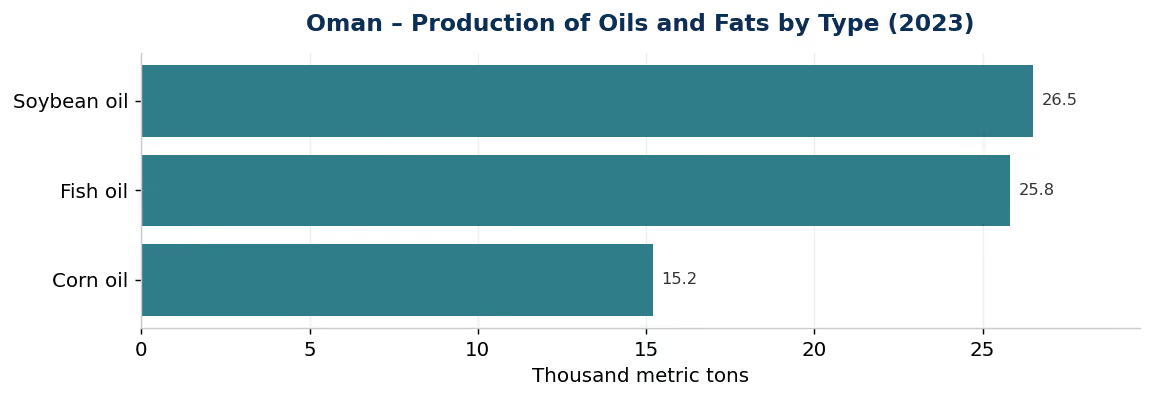
Total production: 68 thousand metric tons in 2023.
Main products:
fish oil (26 thousand metric tons)
soybean oil (27 thousand metric tons)
corn oil (15 thousand metric tons)
Notes:
The importance of fish oil: it reflects the use of the Sultanate’s marine resources.
Production diversity: the presence of soybean and corn oil indicates attempts to diversify the domestic production base.
Exports
Total exports: 241 thousand metric tons in 2023.
Leading products exported:
palm oil (176 thousand metric tons)
sunflower oil (25 thousand metric tons)
fish oil (25 thousand metric tons)
soybean oil (10 thousand metric tons)
corn oil (6 thousand metric tons)
Growth drivers:
The strategic location: it facilitates access to Asian, African and global markets.
The advanced logistics infrastructure: modern ports and facilities support re-export activity.
Quality improvement: Omani plants’ commitment to manufacturing and packaging standards strengthens confidence in foreign markets.
Recommendations
Support agricultural investment: encourage the local cultivation of oilseed crops to reduce reliance on imports.
Develop processing industries: build modern refining and packaging facilities, which enhances added value and increases export opportunities.
Encourage research and development: improve fish oil production methods and strengthen its role in the food and health industries.
Diversify export markets: sign new trade agreements and expand partnerships with oil-importing countries.
Conclusion
The oils and fats sector in Oman is seeing notable development, driven by growth in domestic consumption and increased re-export operations. Despite the heavy reliance on imports to meet demand, the rise in domestic production indicates a real will to strengthen manufacturing and agricultural capacities. With continued government and private-sector investment in infrastructure and the development of the food industries, this sector is expected to see further growth and stability in the coming years.
 Advertise