Morocco enjoys a strategic location on the shores of the Mediterranean Sea and the Atlantic Ocean, which positively affects the oils and fats sector, both in terms of production and trade. Morocco’s population is around 37 million (2023 estimates), and population and economic growth are increasing domestic demand for oils and fats, especially in cooking and food manufacturing.
Morocco’s Exports, Imports, Production and Consumption of Oils and Fats
The Kingdom of Morocco relies on a mix of domestic production and imports to meet its needs, with export activity for some high-value products such as olive oil and fish oil.
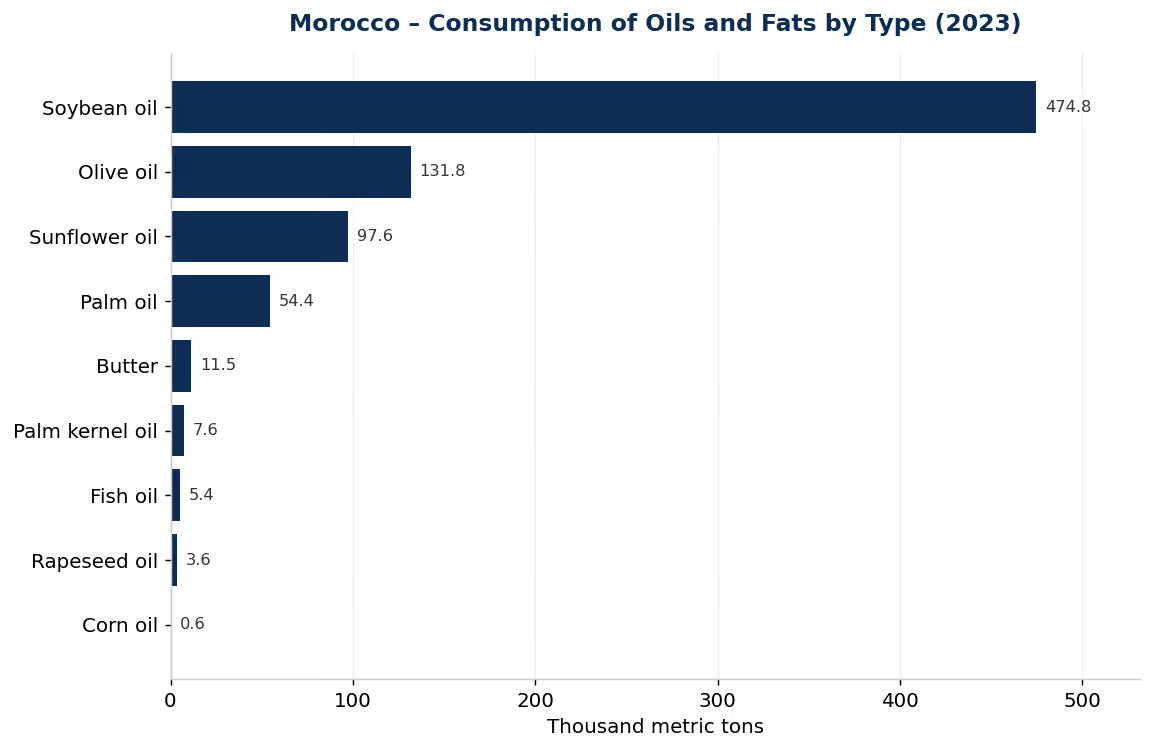
Domestic consumption: 787 thousand metric tons
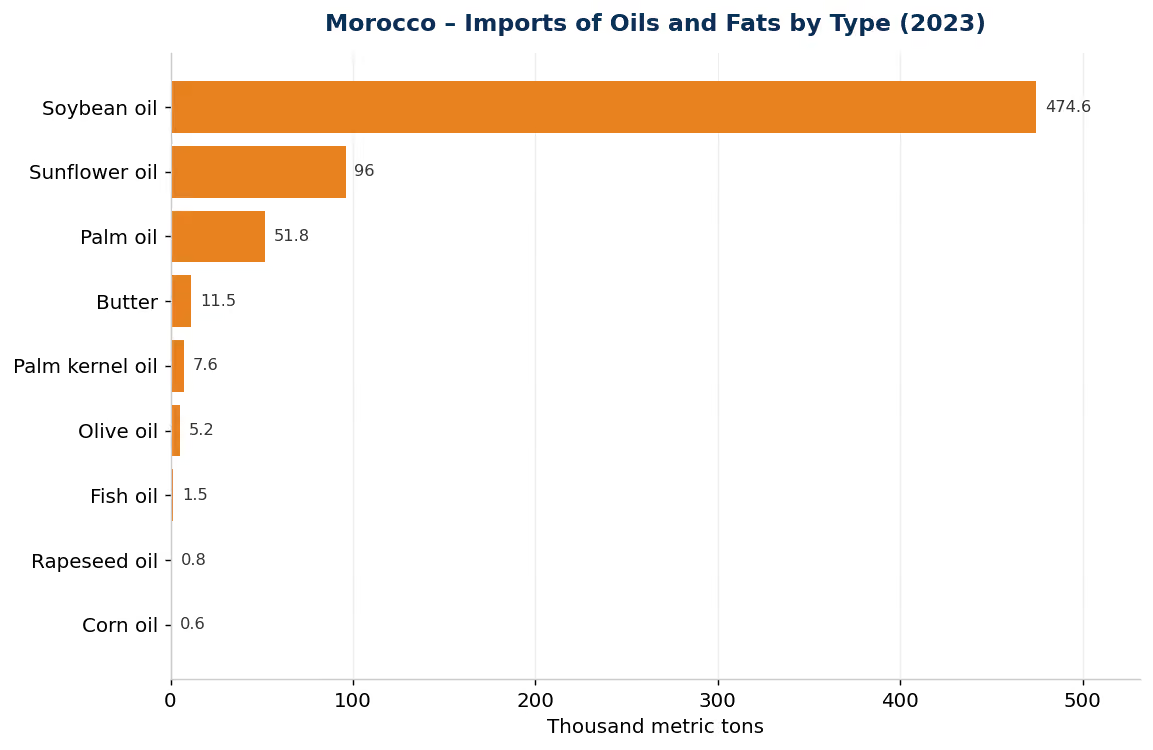
Imports: 650 thousand metric tons
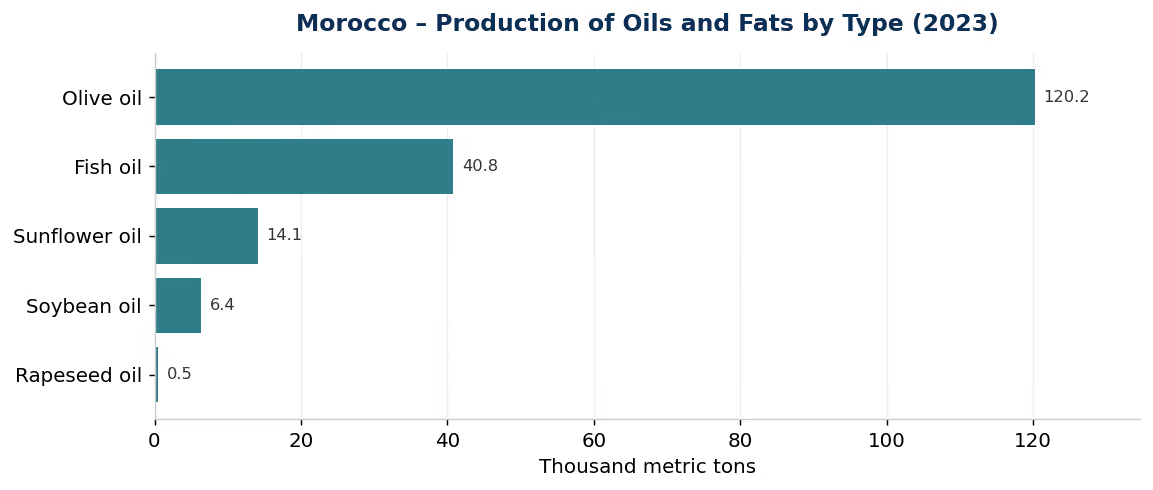
Domestic production: 182 thousand metric tons
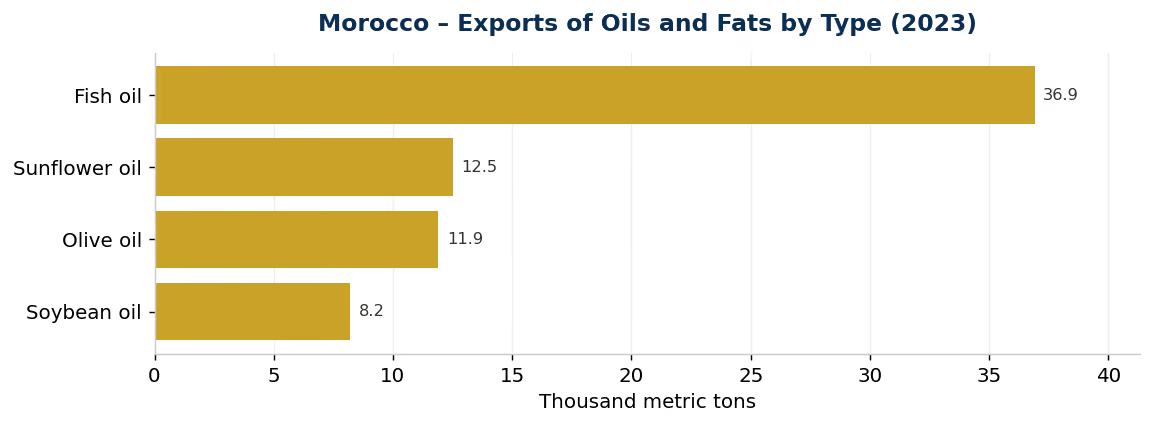
Exports: 70 thousand metric tons
These figures indicate a gap between consumption and production that is partially bridged through imports, with some high-quality products exported to global markets.
Historical Analysis for the Period 2019 to 2023
The chart below illustrates the changes in consumption, imports, production and exports over the past five years:
Key Observations
A gradual decline in consumption: from 862 thousand tons in 2019 to 787 thousand tons in 2023, which may be linked to changes in consumption habits or consumption-rationing policies.
Relative stability in imports: they ranged between 643 and 706 thousand metric tons, recording 650 thousand metric tons in 2023.
Fluctuation in domestic production: it peaked in 2019 (266 thousand metric tons) before declining to 182 thousand metric tons in 2023, indicating challenges in the production of certain oilseed crops or climate changes.
A drop in exports: they fell from 105 thousand metric tons in 2019 to 70 thousand metric tons in 2023, which may be due to increased domestic consumption or a shortfall in production.
Consumption
Total consumption: 787 thousand metric tons in 2023.
The gap between production and consumption: domestic production is still insufficient to meet demand.
Global market volatility: Morocco’s imports are affected by oil prices on the international market.
The diversity of domestic consumption: the market’s need for multiple types of oils increases imports.
Domestic Production
Total production: 182 thousand metric tons in 2023.
Main products:
olive oil (120 thousand metric tons)
fish oil (41 thousand metric tons)
sunflower oil (14 thousand metric tons)
soybean oil (6 thousand metric tons)
rapeseed oil (1 thousand metric tons)
Development indicators:
Olive oil: represents the cornerstone of domestic production, with international renown for Moroccan quality.
Fish oil: Morocco has an extensive sea coast, which supports fish oil production for food manufacturing and export.
The need to strengthen the remaining sectors: such as soybean and sunflower oil to keep pace with domestic demand and reduce imports.
Exports
Total exports: 70 thousand metric tons in 2023.
Leading products exported: fish oil (37 thousand metric tons), olive oil (12 thousand metric tons), sunflower oil (13 thousand metric tons), and soybean oil (8 thousand metric tons).
Driving factors:
The high quality of olive oil and fish oil: helps it compete in regional and global markets.
Geographic location: provides easy access to European and African markets.
The diversity of exported products: although the quantities are relatively limited compared to domestic consumption.
Recommendations
Support farmers and develop infrastructure: invest in research centres and agricultural technologies to improve the productivity of oilseed crops, especially olives and sunflower.
Encourage processing industries: build modern refining and packaging plants that raise added value and contribute to reducing imports.
Promote domestic products: strengthen the Moroccan brand, especially for olive oil and fish oil, in global markets.
Diversify import sources: to avoid the risks of over-reliance on a limited number of countries, and to cope with global price volatility.
Conclusion
The evolution of the oils and fats market in Morocco in recent years points to a diversity in sources of production and consumption, with a clear reliance on imports of vegetable oils, especially soybean and sunflower oil. Despite the slight decline in total consumption and production, olive oil and fish oil remain among the most important domestic products with high export potential. With continued government and private-sector efforts to support agriculture and the food industries, this sector could see increasing growth that contributes to strengthening food security and improving Morocco’s trade balance.
 Advertise