Kuwait: A Look at the Oils and Fats Market for 2023
The State of Kuwait is one of the prominent economies in the Arabian Gulf region, with a population of around 4.7 million (2023 estimates). Despite its heavy reliance on imports of food products, rising income levels and the diversity of consumption habits are clearly reflected in the oils and fats market.
Consumption in 2023
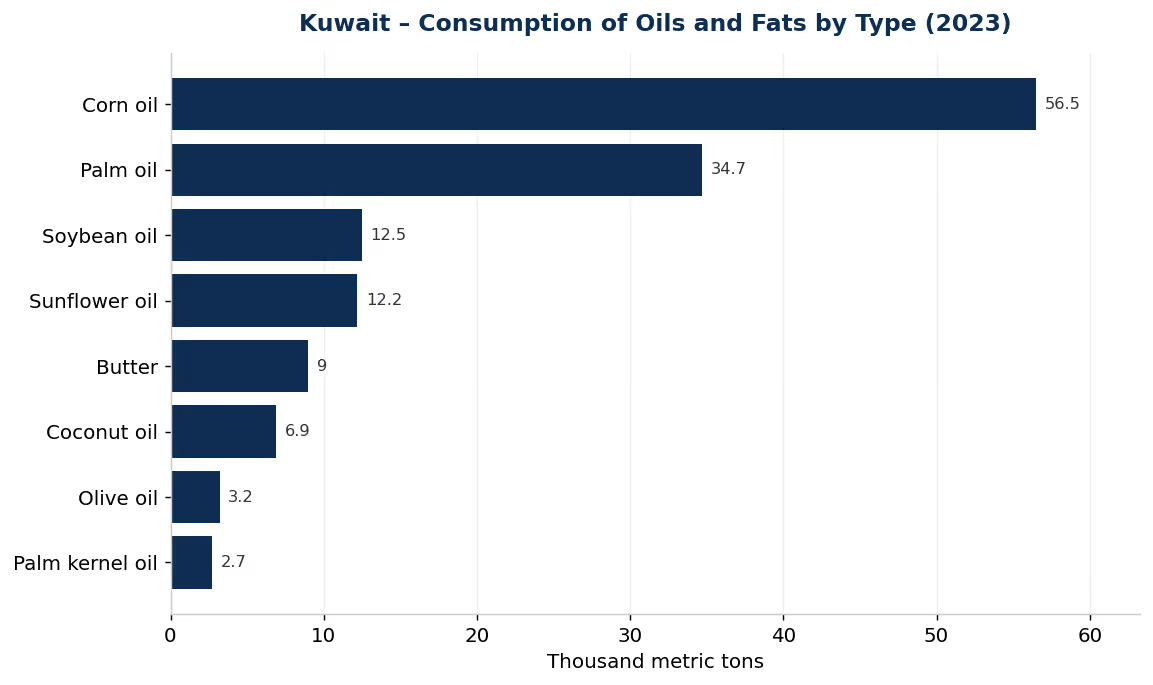
The available data indicates that total consumption of oils and fats in Kuwait reached around 138 thousand metric tons during 2023. Below is the distribution of consumption by type of oil or fat:
Corn oil: 57 thousand metric tons
Palm oil: 35 thousand metric tons
Soybean oil: 13 thousand metric tons
Sunflower oil: 12 thousand metric tons
Coconut oil: 7 thousand metric tons
Butter: 9 thousand metric tons
Olive oil: 3 thousand metric tons
Palm kernel oil: 3 thousand metric tons
This diversity reflects the Kuwaiti consumer’s reliance on several types of oils, with corn oil and palm oil at the top of the list. A relatively modest consumption of olive oil and palm kernel oil can also be observed.
Factors Affecting the Kuwaiti Oils and Fats Market
High income level: this helps increase purchasing power, prompting consumers to acquire different types of oils and fats, whether for daily use or in restaurants and cafes.
Dietary diversity: Kuwait has a strong presence of international cuisines, which requires a diversity in the use of oils such as corn, soybean and palm oil to meet the needs of different dishes.
Government policies: food-subsidy measures and customs duties affect the prices of imported oils, and therefore consumer preferences.
Health trends: some consumers pay increasing attention to health aspects, which may lead to rising demand for oils such as olive oil or sunflower oil.
Challenges and Opportunities
Challenges:
Reliance on imports: given the limited domestic agricultural production, Kuwait imports most of its oil needs, which makes prices vulnerable to global market fluctuations.
Health awareness: despite growing interest in a healthy diet, some oils rich in saturated fats are still consumed in large quantities, which may require greater efforts in awareness.
Opportunities:
Diversifying import sources: this could enhance food security and provide broader options for consumers.
Expansion in the food industries: the food and beverage sector is seeing continuous growth, which opens the door to new investments in packaging, refining and distribution.
Conclusion
The 2023 data shows the extent of the diversity in oil and fat consumption in Kuwait, with a clear focus on corn and palm oil, alongside other types such as soybean and sunflower. Despite the challenges associated with the heavy reliance on imports, the high purchasing power and the diversity of food culture provide opportunities for growth in this sector. Government and private-sector efforts are expected to continue supporting infrastructure and logistics services to ensure that growing demand is met and food security in the country is strengthened.
 Advertise