Iraq is one of the Arab countries of growing importance in the oils and fats sector; the domestic market is seeing notable growth in consumption as a result of a rising population estimated at around 43 million (2023 estimates), in addition to increased demand in the food industries. Iraq relies on a mix of domestic production and imports to meet its needs, with export activity for some products.
Iraq’s Exports, Imports, Production and Consumption of Oils and Fats
The data available for 2023 indicates the following:
Domestic consumption: 958 thousand metric tons
Imports: 787 thousand metric tons
Domestic production: 204 thousand metric tons
Exports: 121 thousand metric tons
These figures reflect a notable reliance on imports to cover part of domestic demand, at a time when Iraq is achieving growth in domestic production, especially in certain types of oils.
Historical Analysis for the Period 2019 to 2023
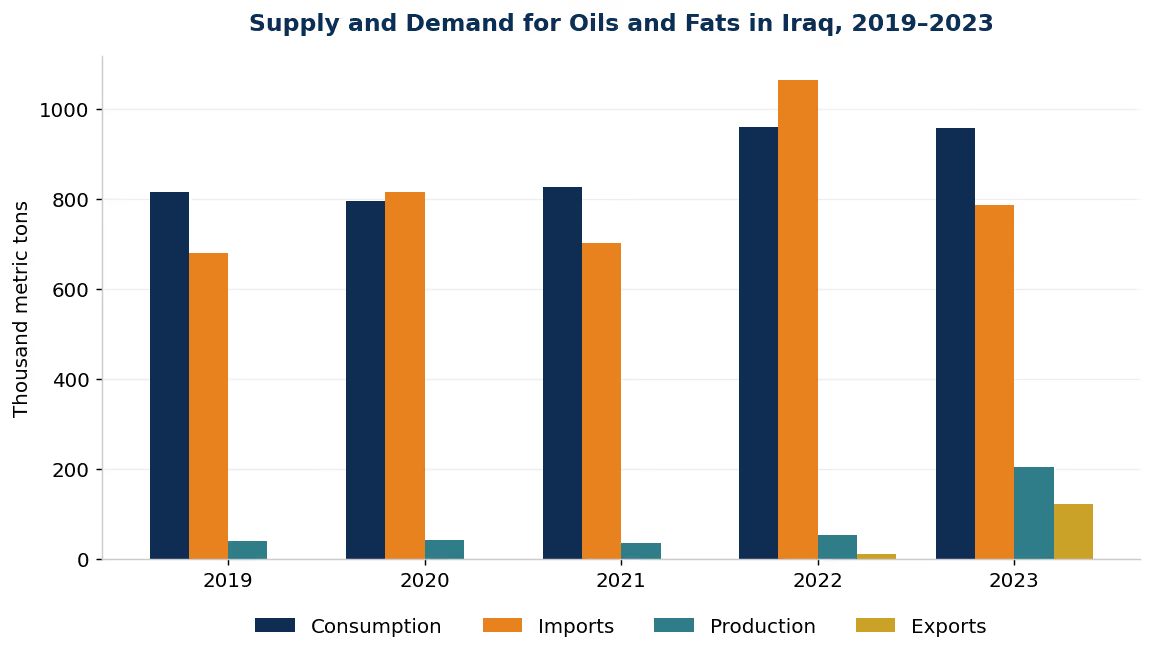
The following chart shows the development in the indicators of consumption, imports, production and exports over the past five years:
Key Observations
Fluctuations in imports: they rose significantly in 2022 to reach 1,066 thousand metric tons, before declining in 2023 to 787 thousand metric tons.
A leap in domestic production: it moved from 53 thousand metric tons in 2022 to 204 thousand metric tons in 2023, indicating a significant improvement in domestic manufacturing capacity or an expansion in the cultivation of oilseed crops.
Growth in exports: exports appeared clearly in 2022 (11 thousand metric tons) then rose markedly in 2023 (121 thousand metric tons), which may reflect efforts to develop processing industries or the signing of new trade agreements.
Relative stability in consumption: it ranged between 796 and 961 thousand metric tons during the period, reaching 958 thousand metric tons in 2023.
Consumption
Total consumption: 958 thousand metric tons in 2023.
The gap between consumption and production: despite the improvement in domestic production, Iraq still relies on imports to cover a significant part of demand.
Disruptions in global markets: price volatility and supply chains may affect import volumes and diversity.
Product quality: some imported oil types may have a higher quality reputation in the domestic market, which boosts demand for them.
Domestic Production
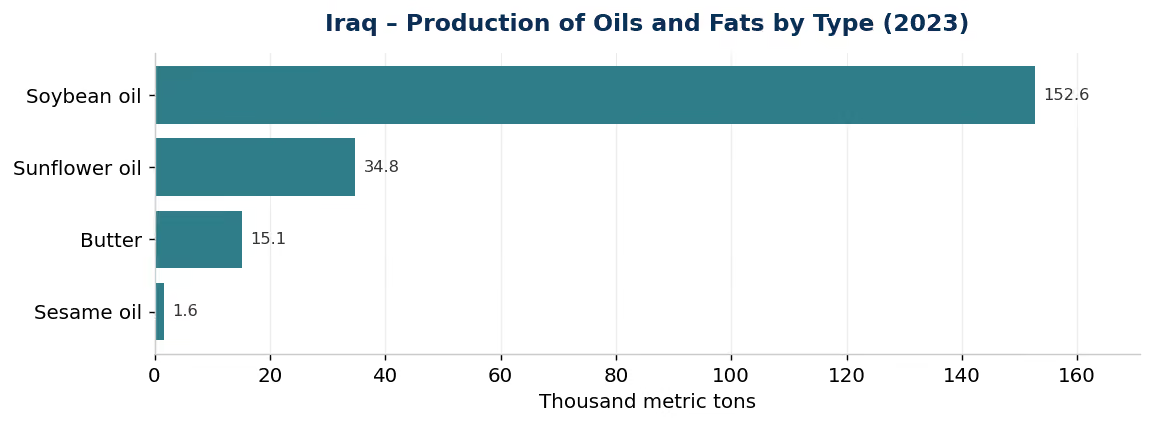
Total production: 204 thousand metric tons in 2023.
Main products:
soybean oil (153 thousand metric tons)
sunflower oil (35 thousand metric tons)
butter (15 thousand metric tons)
sesame oil (2 thousand metric tons)
Development indicators:
The leap in soybean oil production: this may be the result of developing new industrial facilities or expanding soybean cultivation.
Improvement in sunflower oil production: indicates the potential for greater use of agricultural land and support for farmers.
Product diversity: enhances the prospects for partial self-sufficiency and reducing reliance on imports.
Exports
Total exports: 121 thousand metric tons in 2023.
Products exported:
soybean oil (113 thousand metric tons)
sunflower oil (8 thousand metric tons)
Growth drivers:
A rising production surplus: especially in soybean oil, which has allowed large quantities to be exported.
The signing of trade agreements: these may have facilitated access to regional and international markets.
Improved quality of domestic production: which has made it competitive in foreign markets.
Recommendations
Diversify domestic production: boost the production of other oils such as palm oil or corn oil to meet market needs and reduce reliance on imports.
Improve supply chain efficiency: enhance the infrastructure and technologies used in storage and transport to reduce losses and raise product quality.
Encourage investment in processing industries: attract the private sector to build modern refining and packaging plants, contributing to increasing the added value of domestic products.
Boost exports: provide incentives for exporters, facilitate customs procedures, and sign new trade agreements to open more markets to Iraqi oils.
Conclusion
The oils and fats market in Iraq has undergone radical shifts in recent years, with a clear emergence of soybean oil and sunflower oil production, and a tangible rise in exports during 2023. Although consumption still requires large imports, the leap in domestic production points to promising future potential, especially with continued government and private-sector efforts to support the oils and fats sector. A focus on developing supply chains and increasing product diversity is expected to improve Iraq’s competitiveness in regional and global markets.
 Advertise