Oils and fats form an essential part of the dietary and industrial system in Egypt, where the country relies heavily on imports to meet the needs of the domestic market. This analysis aims to provide a comprehensive view of the consumption, production, imports and exports of oils and fats in Egypt during 2023.
Historical Analysis for the Period 2019 to 2023
Development of consumption:
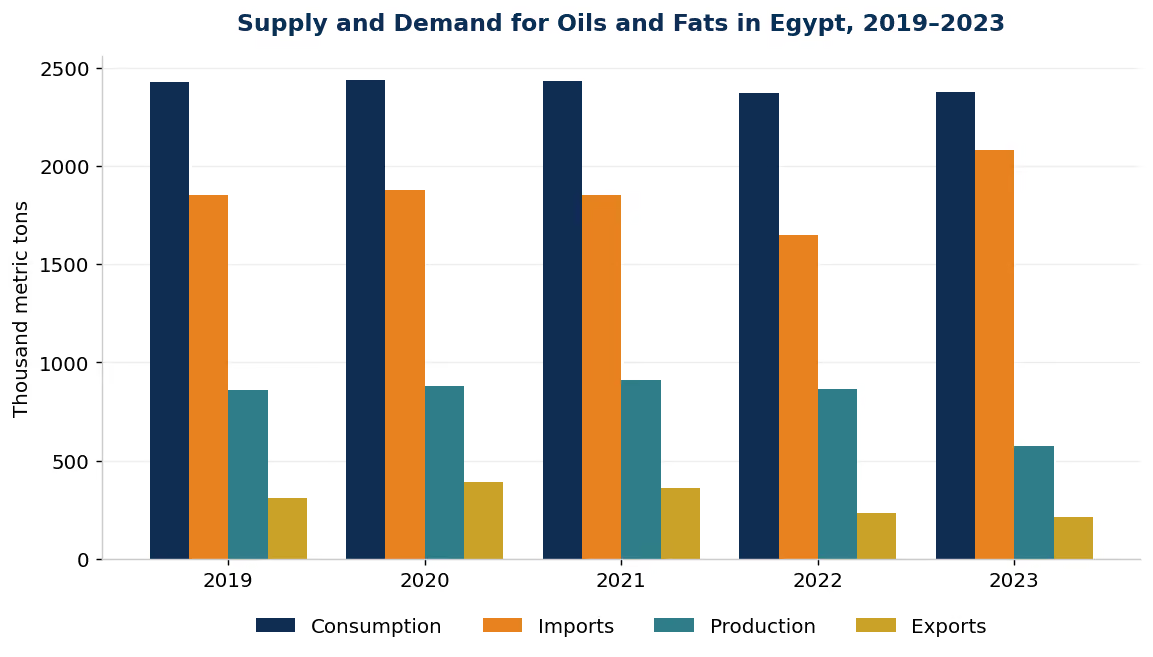
Consumption of oils and fats saw relative stability during the period 2019 to 2023, ranging between 2.370 million metric tons in 2022 and 2.439 million metric tons in 2020.
Development of imports:
Imports recorded their highest level in 2023 at 2.082 million metric tons, compared to a decline to 1.648 million metric tons in 2022.
Development of domestic production:
2023 was the lowest in production at 575 thousand metric tons, while 2021 recorded the highest production level at 909 thousand metric tons.
Development of exports:
Exports recorded their highest level in 2020 at 390 thousand metric tons, while they saw a notable decline to 213 thousand metric tons in 2023.
Observations:
The general trend points to a widening gap between domestic production and consumption, which raises reliance on imports.
The decline in exports in recent years reflects challenges in domestic production and competitiveness.
Domestic Consumption
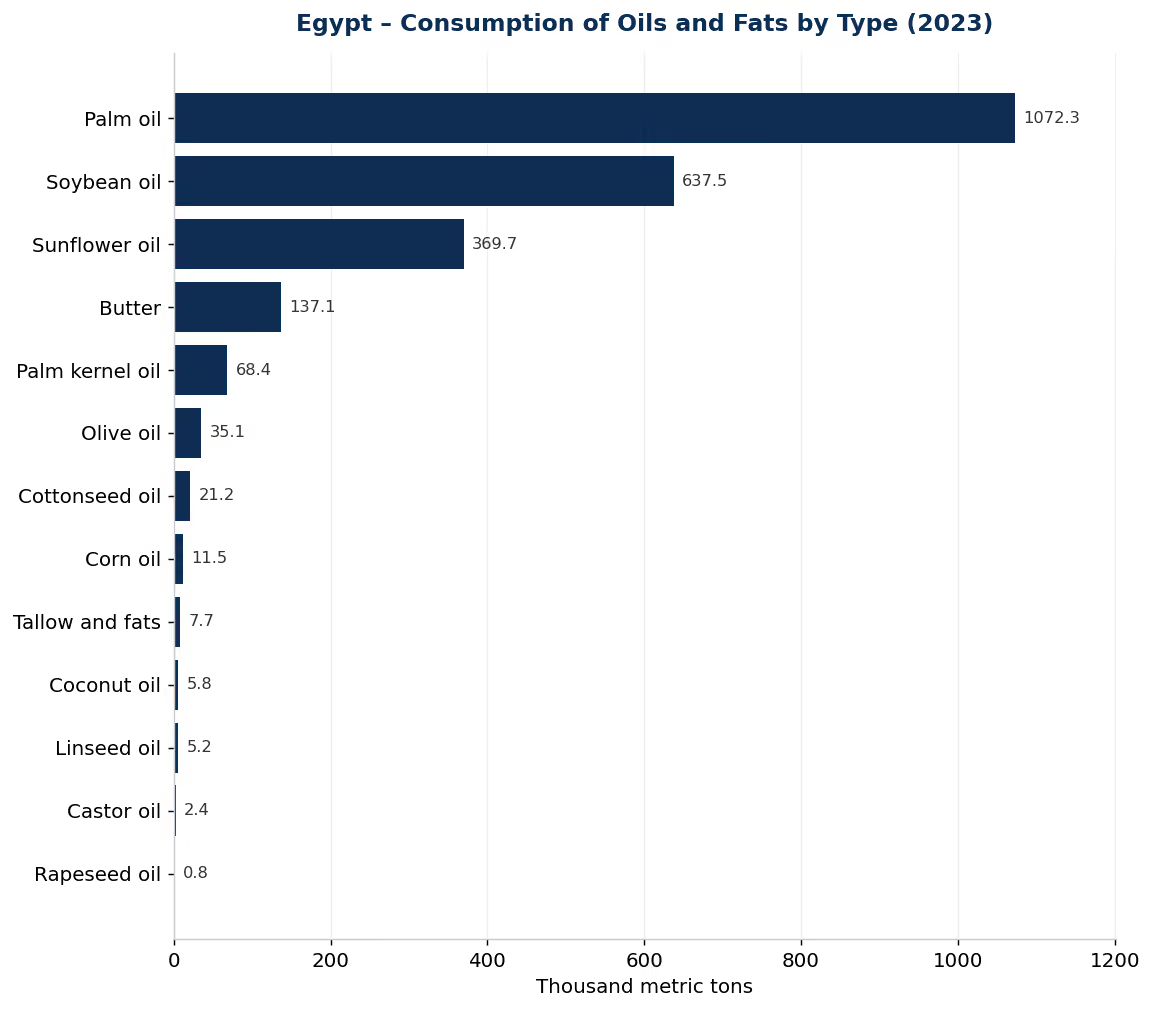
Egypt’s total consumption of oils and fats for 2023 reached around 2.375 million metric tons.
Distribution of consumption:
Palm oil took first place at 1.072 million metric tons, and is the most used oil in the Egyptian market, especially in the food industries.
Soybean oil came in second place at 638 thousand metric tons, and is widely used in cooking and food manufacturing.
Sunflower oil took third place at 370 thousand metric tons.
Least consumed products:
Rapeseed oil and castor oil were the least consumed at 1 and 2 thousand metric tons respectively.
Tallow and fats recorded a low consumption of 8 thousand metric tons.
Observations:
The data indicates a heavy reliance on vegetable oils such as palm, soybean and sunflower oil.
There is a notable consumption of butter at 137 thousand metric tons, reflecting its use in the household and commercial sectors.
Imports
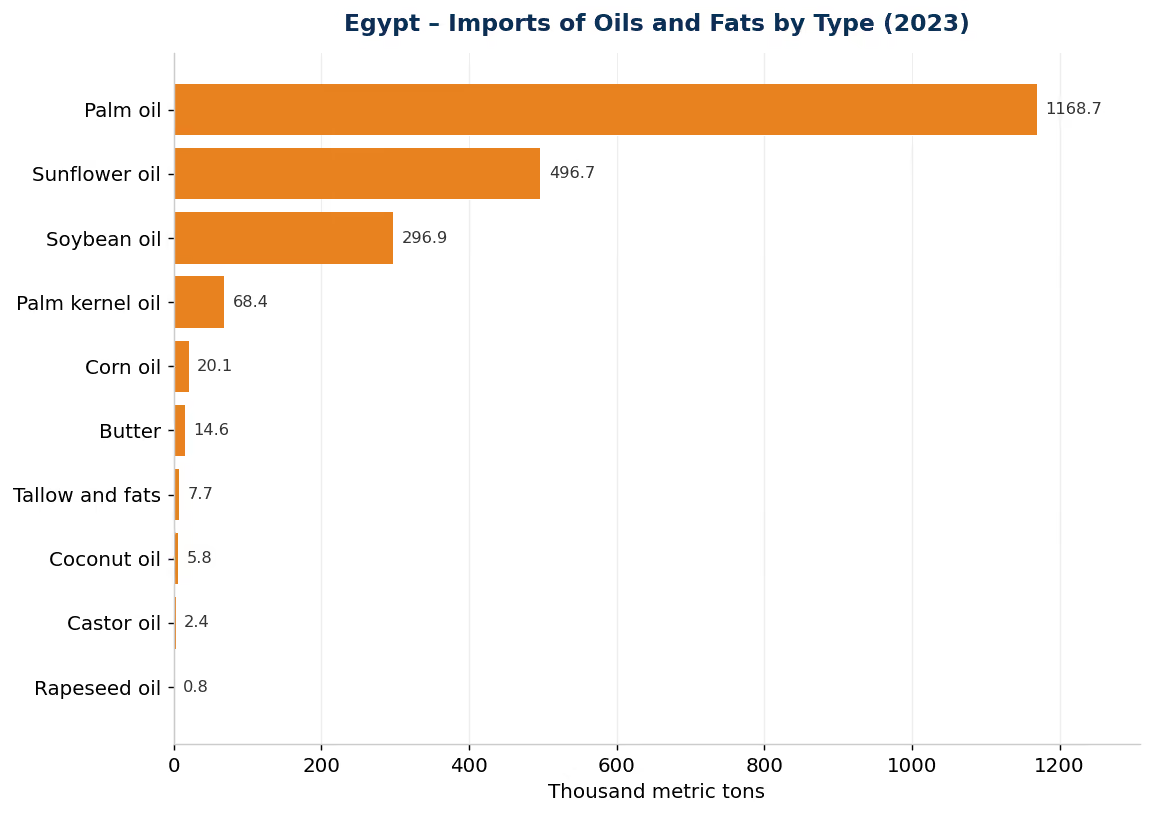
Egypt’s imports of oils and fats reached around 2.082 million metric tons in 2023, making them a key component in meeting domestic demand.
Most imported oils:
Palm oil: represents the largest share of imports at 1.169 million metric tons, reflecting the heavy reliance on foreign markets.
Sunflower oil: its imports reached 497 thousand metric tons.
Soybean oil: recorded imports of 297 thousand metric tons.
Least imported products:
Rapeseed oil recorded minimal imports of 1 thousand metric tons.
Castor oil and coconut oil recorded limited imports of 2 and 6 thousand metric tons respectively.
Observations:
Egypt relies mainly on imports to meet domestic demand, especially for the most consumed oils such as palm and sunflower.
Global price volatility for these oils can be an influential factor on the domestic market.
Domestic Production
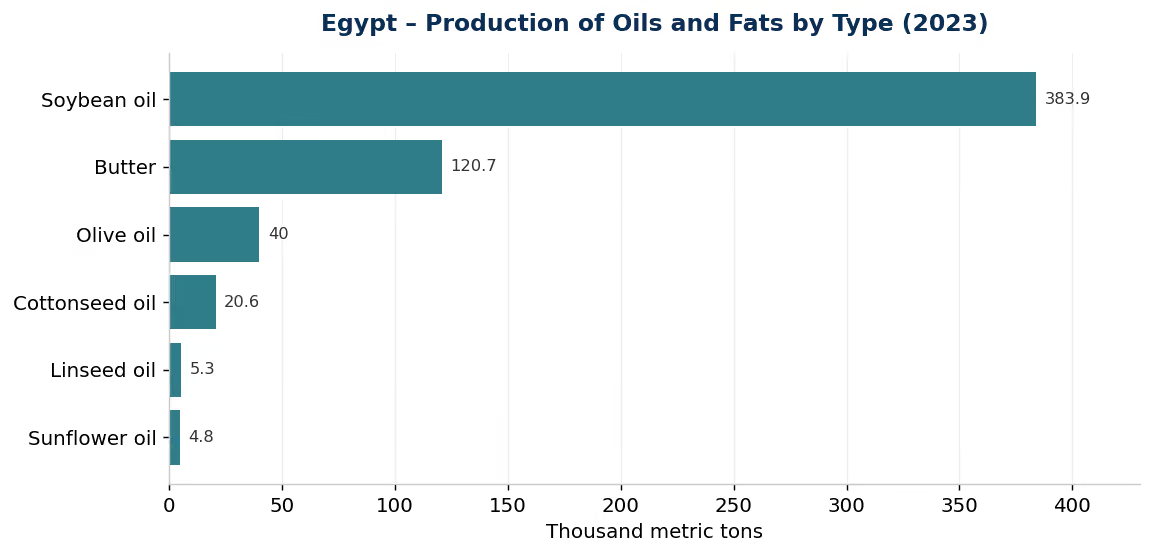
Total domestic production of oils and fats reached only around 575 thousand metric tons, a low figure compared to consumption.
Most domestically produced oils:
Soybean oil: represents the largest part of domestic production at 384 thousand metric tons.
Butter: its domestic production reached 121 thousand metric tons.
Olive oil: recorded production of 40 thousand metric tons.
Least produced products:
Sunflower oil and linseed oil recorded low production of 5 thousand metric tons each.
Observations:
Domestic production covers only a small share of demand, leaving a large gap that relies on imports.
There is a need to strengthen the cultivation of oilseed crops such as sunflower and soybean.
Exports
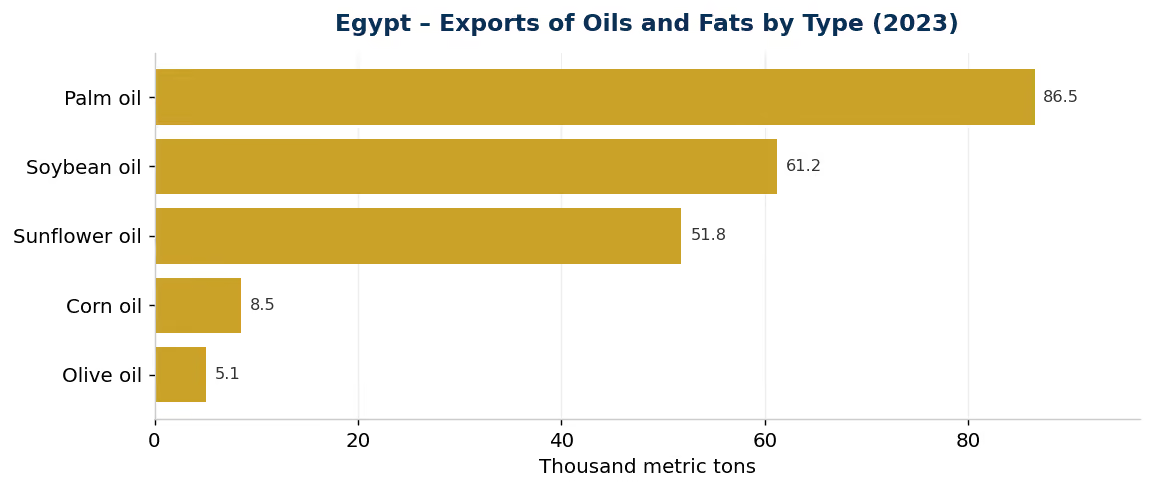
Total exports reached around 213 thousand metric tons in 2023, a small share compared to production and imports.
Most exported oils:
Soybean oil: tops the list at 61 thousand metric tons.
Sunflower oil: recorded exports of 52 thousand metric tons.
Palm oil: its exports reached 87 thousand metric tons.
Least exported products:
Olive oil and corn oil recorded limited exports of 5 and 9 thousand metric tons respectively.
Observations:
Exports show that Egypt has a competitive capacity in certain oils, especially soybean and sunflower.
The export base can be expanded by improving domestic production.
Recommendations
Increase domestic production:
Strengthen the cultivation of oilseed crops such as sunflower and soybean.
Invest in modern technologies to improve the productivity of olives and other crops.
Reduce reliance on imports:
Focus on achieving self-sufficiency in essential oils such as sunflower and soybean.
Develop oil extraction and refining industries locally.
Boost exports:
Improve the quality of domestic products and increase production to support exports.
Focus on regional and international markets that need high-quality oils.
Manage imports effectively:
Diversify the sources of oil imports to avoid the impact of global price volatility.
Encourage the import of crude oils rather than refined ones to create added value locally.
Conclusion
The available data reflects significant challenges and opportunities for the oils and fats market in Egypt. There is an urgent need to strengthen domestic production to reduce reliance on imports and support exports. This represents an opportunity to improve the national economy and increase Egypt’s competitiveness in regional and global markets.
 Advertise