 Advertise
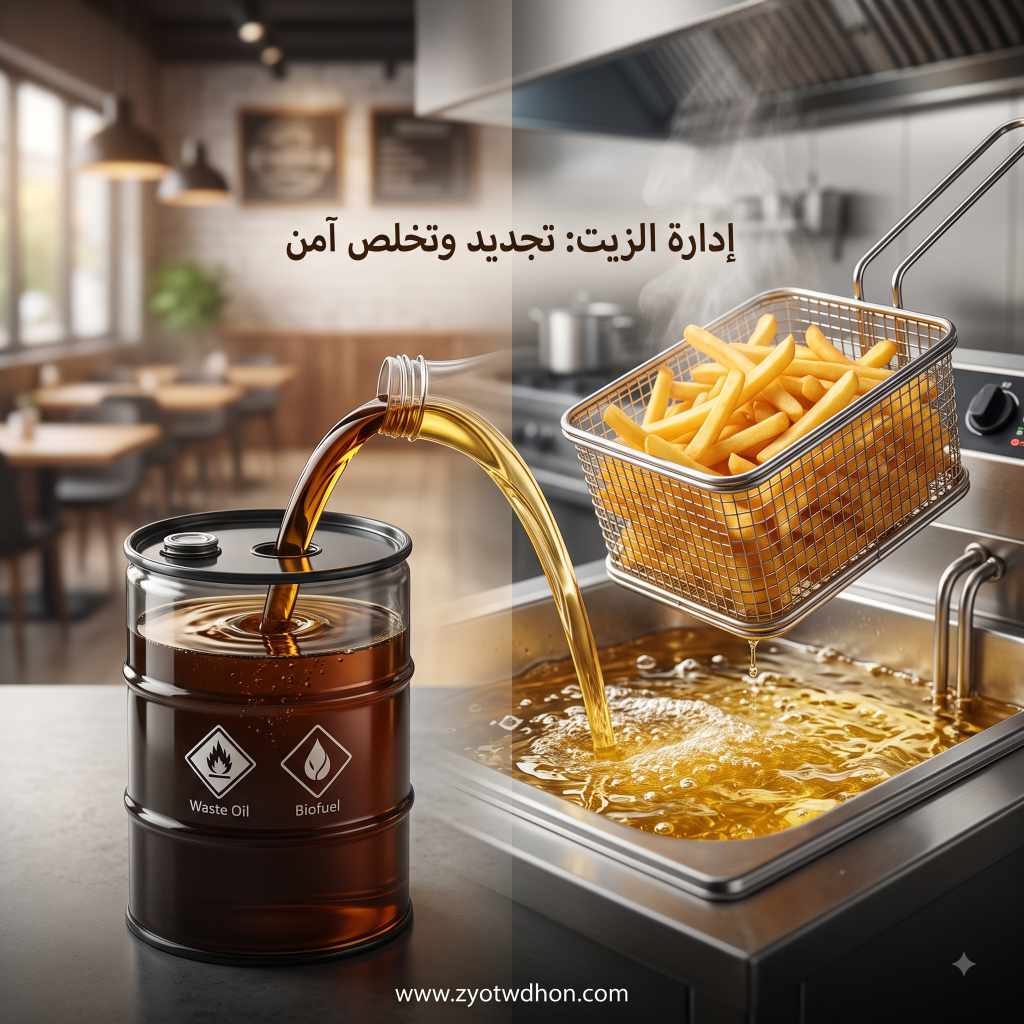
Note: This article was AI-translated from Arabic and is currently under manual review. The author is not responsible for any translation errors. Please refer to the original Arabic text for the most accurate and authoritative information.
In the first part, we began with choosing the right oil and setting temperature and color. Here, we address the question that arises after frying ends: Is the oil still fit for use, or is it time to discard it?
Frying oil may appear clear, leading one to assume it is still good, or it may darken due to spices and be discarded prematurely. Between two hasty decisions lies the right question: Is the oil still performing its function safely and effectively, or have degradation products exceeded acceptable limits?
There is no single answer for households, restaurants, and factories. Sensory indicators may suffice for a precautionary decision in the kitchen, but they are not enough to manage a commercial fryer or a continuous industrial frying line. Nor is there a fixed number of uses, because oil lifespan varies according to type, quality, temperature, heating duration, food characteristics, crumbs, moisture, and the rate of fresh oil addition.
Oil does not function independently of food. Water released from food accelerates hydrolysis; crumbs, flour, and spices may burn, darkening the oil and speeding degradation; and components like fats, salts, and pro-oxidants may transfer into the oil.
Thus, oil used briefly for clean potatoes differs from oil kept hot for long periods with breaded, floured, or spiced foods, or oil used for fish, meat, or frozen products. Key factors include:
Oil must therefore be managed together with the product fried in it, not as an isolated material.
Crumbs and residues are not merely cosmetic issues; exposed to heat, they burn and accelerate oil darkening and flavor degradation. They should be removed continuously according to the operation level:
However, filtration removes suspended particles—it does not remove dissolved oxidation, degradation, and polymerization products, nor does it restore Total Polar Materials (TPM) or Free Fatty Acids (FFA) to fresh oil levels. It slows degradation and improves operation, but it does not "renew" chemically degraded oil.
Yes, under conservative conditions, but there is no fixed number of uses suitable for all oils and foods. After frying, allow the oil to cool safely, filter it, and store it in a clean, airtight, opaque container away from light and heat. Refrigeration is preferred to preserve quality, along with recording the date and food type. It is best dedicated to similar food categories, as filtration does not prevent flavor transfer or guarantee allergen removal.
Home cooks should watch for a combination of warning signs rather than a single marker:
A combination of these signs, or a distinct rancid or burnt odor, is sufficient reason to discard oil at home. When in doubt, early disposal is wiser than trying to salvage the oil.
Adding fresh make-up oil is standard practice in many frying systems. During operation, food absorbs oil, and additional oil is lost with crumbs and cleaning. Fresh oil is added to maintain the bath level and replace losses. Regular top-ups lower the average concentration of degradation products and stabilize performance, provided the existing oil remains fit for use and within acceptable limits.
At home, a limited quantity of previously used oil may be topped up with fresh oil if visual properties are acceptable, it was stored correctly, and it shows no signs of degradation. In restaurants, hotels, and factories, topping up is part of a documented procedure tied to oil absorption, fryer capacity, load, temperature, and measurements of TPM, FFA, and other quality indicators.
However, if oil becomes rancid, smokes early, is highly viscous, or exceeds regulatory limits, fresh oil must never be added to dilute readings or mask degradation. Adding fresh oil lowers the concentration of certain degradation products, but it does not erase what has already formed.
The Golden Rule: We top up good oil to maintain performance; we do not dilute degraded oil to return it to service.
Studies confirm that top-up rate, food characteristics, frying conditions, and initial oil quality are primary drivers of frying bath lifespan. However, experimental findings do not imply unlimited life, nor do they eliminate the need for testing or compliance with regulatory limits.
In commercial fryers, oil may appear acceptable in color despite accumulated degradation products, or it may darken early due to spices and coatings without color alone being decisive. Therefore, sensory monitoring must be paired with operational management: preventing dry heating, avoiding overloading, controlling temperature, filtering regularly, cleaning sediment zones, and recording test results and top-ups.
Handheld devices are useful for estimating Total Polar Materials (TPM) on-site, provided they are calibrated and used according to manufacturer instructions. Free Fatty Acid test strips measure a different parameter and are not a direct substitute for TPM measurement. In regulatory disputes or when reference accuracy is required, accredited laboratory testing remains the standard.
On continuous frying lines, the question is not "How many times was the oil used?" because production does not run in discrete household batches. What matters is oil residence time, turnover rate, top-up volume, oil carry-out by product, temperature, production load, food type, and crumb removal efficiency.
Control is therefore built on structured sampling and trend tracking over time. Alongside TPM and FFA, quality plans may track viscosity, color, moisture, impurities, oxidation products, or polymers depending on product requirements. Peroxide value alone is not recommended for hot frying oil, as primary peroxides decompose at high temperatures, yielding misleadingly low readings despite ongoing degradation.
The goal is not merely oil that meets numerical limits, but a final product with consistent color, taste, odor, and oil content, supported by a fully traceable operational log.
Oils consist primarily of triglycerides, which are relatively non-polar. During frying, hydrolysis, oxidation, and polymerization generate more polar compounds. Total Polar Materials (TPM) increase as degradation progresses, providing a broader cumulative measure than color, odor, or peroxide value alone.
Free Fatty Acids (FFA) increase primarily through hydrolysis. While FFA is an important indicator, it does not measure the same compound group as TPM. Oil may be sensorially rejected before reaching numerical limits if it imparts off-flavors to food. Effective measurement is not an isolated number—it is part of an integrated management system covering oil, product, and logs.
Under Egyptian National Food Safety Authority (NFSA) Board Decision No. 1 of 2023, used oil or fat is deemed unfit for human consumption if Total Polar Materials exceed 25% by weight, or Free Fatty Acids exceed 1.25% (calculated as oleic acid). Exceeding either limit requires immediate discarding; adding fresh oil or clarifying agents to reuse the oil for cooking, frying, or food processing is strictly prohibited.
The regulation also obliges establishments to handle waste oils and fats exclusively through licensed entities and to maintain documentation confirming handoff. Here the distinction is clear: sensory checks serve as an accessible early warning, while documented measurement, logs, and compliant disposal are mandatory for food establishments.
Discarded oil must never be poured down sinks, toilets, or drainage networks, nor dumped as liquid onto soil or with general trash. It solidifies in pipes, traps food particles, and worsens blockages and odors. Selling used oil to unauthorized buyers or primitive re-refiners for re-entry into the food chain is strictly forbidden.
The Simple Rule: Once oil finishes its culinary role, its safe collection and recycling pathway begins.
Home soap making from large quantities of used oil is discouraged without proper training and safety equipment, as caustic alkalis pose severe chemical burn risks. Burning oil for disposal is also prohibited. The Egyptian Ministry of Environment specifies that collection, transport, storage, and recycling of used cooking oil are subject to licensing and tracking regulations managed by the Waste Management Regulatory Authority (WMRA).
Frying oils should not be managed out of fear or false economy. Premature disposal wastes resources, while uncontrolled extension risks food safety and quality. Between them lies sound scientific management: removing crumbs, controlling heat and load, topping up good oil systematically, monitoring key indicators, and stopping decisively when discard thresholds are met.
Thus the cycle of "Conscious Crispness" is completed: select the right oil, control the frying process, monitor changes, top up while fit, discard when necessary, and prevent re-entry into the food chain through safe disposal and recycling.
Having explored frying bath management from top-up to discard, Part 3 moves to the most popular home alternative: What does an air fryer actually deliver?