 Advertise
Note: This article was AI-translated from Arabic and is currently under manual review. The author is not responsible for any translation errors. Please refer to the original Arabic text for the most accurate and authoritative information.
There is an old love story and love between humans and oil and fat as a food and source of energy used in the past for heating, cooking, frying and roasting, making soap, detergents, paints and feed from it. Biodiesel was even made from it when I needed green, environmentally friendly and sustainable fuel.
After use, edible oil becomes Used Cooking Oil (UCO). In this case, it is called waste or waste. In fact, it is a raw material for other non-food industries.
During my work in the manufacture of biodiesel (biodiesel), I need used edible oil as a raw material. Every day, I receive varying amounts of used edible oil. This disparity is sometimes in quantities, quality, color, or smell depending on regions, method of use and diet pattern. Therefore, I wrote this article on the prevailing dietary patterns in Egypt based on used edible oil.

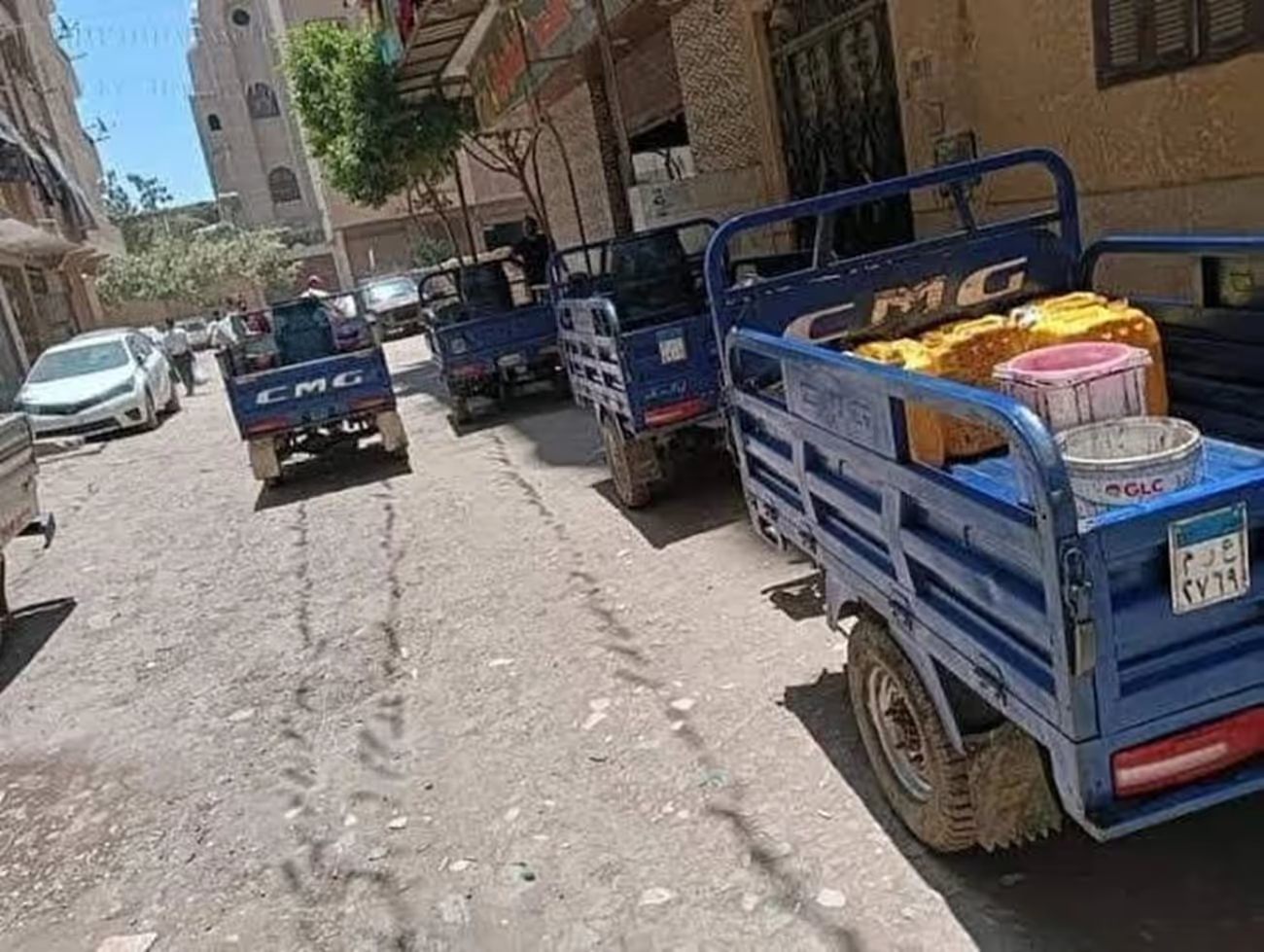
“We buy used food oil per kilo for 30 pounds, six houses. Keep in mind this used edible oil. Why is the value of the oil... We are buying used cooking oil in Kilo 30, Six Al-Bait.”
We hear this sound several times a week from collecting oil in the streets for more than 5 years, but the important question here is where does the used edible oil go?
There are many rumors that through commercial fraud, unscrupulous people revive oil and bleach its color to make it suitable for human use. It is a deadly carcinogenic poison. There have been several seizures made by the Ministry of Supply in this regard in which it has secured places where used edible oil is recycled and sold as suitable for use.
After more than 20 years in this field, I am convinced that these people are in fact a very small group and that the quantities being bleached are small compared to the quantities used for industrial uses such as making soap, detergents, paints and making biodiesel, the subject of my experience.
As usual, attempts at fame, media and journalistic exposure have shown commercial fraud in industries based on edible oil (oleochemicals) such as the manufacture of soaps, detergents, paints, fatty acids, feed and biodiesel.
In addition, there is a very strong competition in collecting used edible oil between the aforementioned industries. Over the past 40 years, the supply of used edible oil has been very low than required, making it a popular and vital material, which suggests beliefs and fantasies about it.
When talking about “collecting used edible oil”, we cannot ignore the most important centers for collecting used edible oil, namely “Tanta City” as well as “Old Egypt District”, where there are dozens of stores specialized in collecting, storing and selling used edible oil professionally in commercial quantities similar to wholesale trade. I can say that most of the quantities collected from all over the Republic reach one of these centers. This concentration is for reasons that can be discussed in detail later. However, we can quickly refer to the experiences of these areas in the field of oil, soap and oleochemicals in the sixties. Egypt was famous for growing different types of oilseeds such as Soya, sunflower, cotton and linen. These areas were the areas of oil extraction and the production of soap and feed. With the change of time, these places became centers for collecting, storing and transporting used edible oil.
In general, frying is one of the most important eating habits in Egypt and is agreed upon by all classes of society. Middle-income and high-income classes fry different types of meat factories such as burgers, chicken, fish and shrimp. Low-income social classes fry different types of plants such as potatoes, eggplant, zucchini, cauliflower and pepper
As is the case in overfishing, there are overfrying operations in which oil is exaggerated for dozens of times and at high temperatures, causing a black color to the oil and causing significant health and environmental damage to those who eat it. This is famous in ta'amiya, falafel and fish restaurants to the extent that the word “they are eaten in Arab oil” is famous to express the exaggerated use of oil. Note that reusing frying oil causes liver disease, depression and cancer
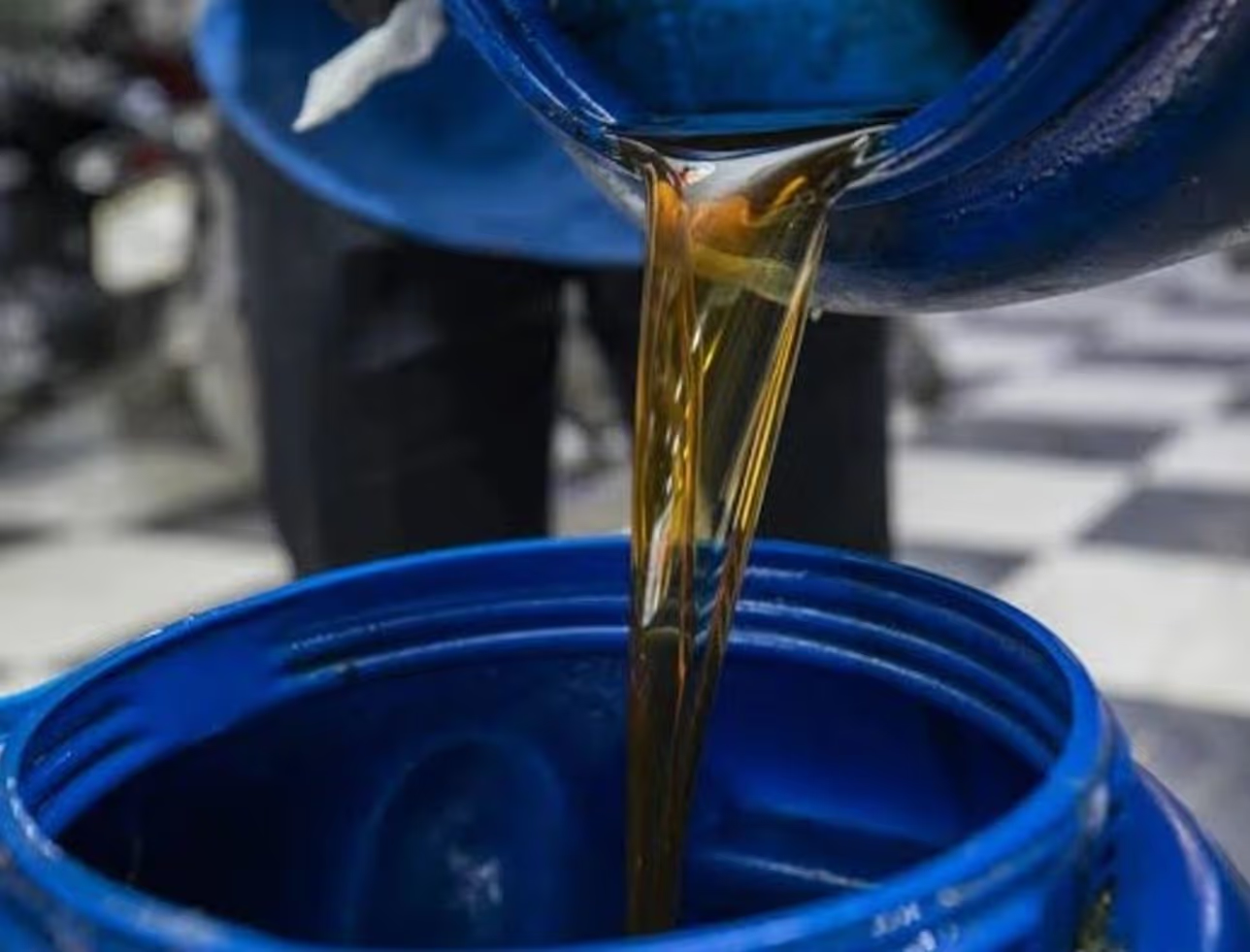
When talking about collecting used edible oil, we cannot ignore talking about “points of origin” (houses - restaurants, hotels, cafes (horeca) - food factories - others). These points of origin are the ones that use edible oil for cooking and frying purposes and turn it into a non-existent substance that is not suitable for human and animal use.
The annual oil consumption rate in Egypt is 24 liters per capita
Homes use soy oil, sunflower oil, corn and palm oil. Basically, each type of oil is a single oil or a mixture and the mixture is more widespread
Olive oil is limited for many reasons, including its high price, including that it is not suitable for frying and roasting, but it is added to salads or frying eggs. There is nothing left of it.
In some areas, there is a good presence of air fryer with very small amounts of oil compared to the method of immersion frying
At the beginning of the month, all people said fish and shrimp or something with chicken or fried chicken in fat or oil
In the middle of the month, all people said potatoes, badanjan, zucchini, cauliflower and pepper
At the end of the month, frying is a little limited
Hotels comply with international standards and use oil only very limited times, not exceeding three times for frying
Taamiya restaurants do not change oil, but only increase it!!! Unfortunately
Liver and sausage restaurants with the same style of frying
Shortening & Olein (Palm Oil derivatives) are mostly used in restaurants because they can be fried at high temperatures despite its harm!!
Cafes serve light fried meals. Therefore, the edible oil used is of high quality and is suitable for the manufacture of biodiesel.
Koshari restaurants and shops fry “onion” as one of the ingredients in Koshari and produce a large amount of used oil that has a minor defect, which is the smell of onion and is often a mixture of shorts and sunflower
You care about the quality of the oil. It is fried in sunflower oil, soy or a mixture of them. The frying is done a few times at acceptable temperatures. This is why the used edible oil resulting from their activity is in good condition, making it an excellent raw material for non-food industries based on oils such as soap, biodiesel, paints, the production of fatty acids and feed.
Most of these factories are located in the governorate of Damietta, the city of Tanta, the city of Desouq, the governorate of Alexandria, and a number of governorates of Upper Egypt, where the manufacture of fried sweets is booming, such as Kablawa, Qadi bite (dumplings), Balah al-Sham, Qatayef during Ramadan, Zainab fingers, Bagasha, fried kunafa (Burma) and others that are fried and then soaked in sherbet (water and sugar held on fire)
The potato industry in Egypt is very booming and has a long history since the entry of Lay's and Chips into Egypt. It is characterized by the fact that the resulting oil has been fried a few times and is isolated from the air, making it retain its physical and chemical properties. These companies usually produce large quantities of used oil. In recent years, companies have installed chips production lines with small amounts of oil for economic and health reasons. These companies often sell the resulting oil through bids and auctions for the highest price two or three times a year
The manufacture of French fries is fried: these are potatoes that are partially fried in the factory before being packaged and distributed, making it easy for consumers to prepare them at home or in restaurants quickly and easily. It is an important source of used edible oil. These factories are located in all governorates of Egypt, especially near potato growing lands in the governorates of Sharkia, Giza, Daqahlia, Alexandria, Al-Buhaira, Menoufia, Port Said, Al-Gharbia, Minya and the New Valley, which has the largest factory in the Middle East to produce semi-fried potatoes with a capacity of 12 tons per hour
Crackers: Crackers are made from grains, potatoes, or corn and have a crunchy texture. The manufacture of crackers is one of the popular and popular food industries in the world, especially in Egypt. The types of crackers are potato chips, corn crackers, and healthy crackers. This industry is one of the most productive industries for high-quality used oils.
It is not possible to talk about the collection and recycling of waste, especially used edible oil and the manufacture of biodiesel, without talking about its impact on reducing carbon emissions resulting from this activity. Collecting used edible oil contributes to a significant reduction in carbon emissions and varies from case to case, but in general, every ton of used edible oil collected contributes to reducing emissions by one ton of carbon equivalent to CO2e. Recycling it and converting it to biodiesel also contributes to reducing emissions by 2 tons of carbon equivalent. In short, it means that the process of collecting used edible oil and converting it into biodiesel contributes to reducing carbon emissions by approximately 3 tons of carbon equivalent with some increase or decrease depending on the project details.
This article is one of the studies of environmental sociology that deals with social patterns and behaviors and their relation to environmental elements (water, air, soil, animals, and humans). When talking about waste and waste and their relation to dietary patterns and methods among the Egyptian people, we should realize that they may be a good source of information and useful conclusions in developing health and environmental services in the areas referred to.